
This project was funded via IAS’s Small Grants Scheme
Alcohol use is often treated as an individual behaviour – something shaped by personal choice, knowledge, or risk awareness. But for many people, drinking is relational, and negotiated within families, communities and across generations. This is true in Romany Gypsy and Traveller communities, where family relationships, care and interdependence play a central role in everyday life.
We worked with Friends, Families and Travellers – a leading national Traveller-led charity working to end racism and discrimination against Gypsy, Roma and Traveller communities – who supported the recruitment of 19 people to take part in the research. This included: 7 Romany Gypsies; 8 Irish Travellers; 3 New Travellers; and 1 Showman. Participants included 11 who identified as women, and 8 as men. Participants were aged between 18-70 years. This comprised 9 youth generation (18-24 years); 6 mid-generation (25-49 years); and 4 older generation (50+ years) participants. Our sample reflected nomadic diversity: this included 10 participants living in bricks and mortar housing; 5 living roadside; and 4 living on local authority sites.
This blog explores what alcohol means across generations in Romany Gypsy and Traveller communities, and why both what we research and how we research it matters for reducing alcohol-related harm in ways that are culturally meaningful and effective.
It is important to note that the stories told in this blog, and the research more broadly, are individual stories, and do not reflect all Romany Gypsy and Traveller communities.
Alcohol as a family practice, not an individual choice
Research on alcohol often assumes that knowledge and behaviours are passed downwards from parents to children. Our findings challenge this. In Romany Gypsy and Traveller families, alcohol use is shaped through ongoing intergenerational negotiation – between young people, parents and grandparents.
Many participants reflected on how their own upbringing shaped their drinking practices. For instance, some mid-generation Romany Gypsy women (bricks and mortar), noted that their early experiences with consuming alcohol without their parents’ knowledge, and in unsafe spaces, shaped how they parented their own children, with some choosing more open, harm reduction-oriented approaches to keep young people safe:
Liana: It’s the same with our daughter…If she was to drink, I’d rather her be with me if she’s going to drink young, because I don’t know what – she could be me, I hope she don’t, but I’d rather her drink young in front of me than to go behind my back in the woods or whatever we did.
Selina: You’re just going to want her to know to drink around people you know are going to keep you safe.
Liana: …I’d like to be a bit more laid back than what my mum was. The times are changing.
Importantly, influence does not flow in one direction. Young adults also played a role in shaping the drinking practices of older family members – encouraging moderation, periods of abstinence, or greater awareness of health impacts. Alcohol knowledge, care and responsibility were shared relationally, rather than hierarchically. The following exchange exemplifies the notion of a two-way transmission of advice and guidance surrounding alcohol consumption between Irish Traveller women, across generations:
Peer researcher: Are there tensions or disagreements about drinking between generations, do you think, between the young’uns and the older?
Nora: If you were drinking too much, there would be.
Stephanie (youth generation, bricks and mortar): I was just thinking that. Maybe try and advise them.
Nora (older generation, local authority site): If we see you drinking too much, we’ll have to advise you, and if you’ve seen us drinking too much, you’d probably say, ‘Mum, you’re drinking too much.’…We often say to people that they’re getting too fond of drinking, then you advise them to try to drink less.
Mary (older generation, local authority site): Get some water, trying to calm it down and that.
Nora (older generation, local authority site): Yes. It’s not good for you.
This matters because it suggests that alcohol harm reduction strategies focused only on individuals – or only on young people – risk missing the relational realities of family life in these communities.
Why “doing alcohol research differently” matters
These insights were only possible because the research itself was done differently. Romany Gypsy and Traveller communities are frequently described as “hard to reach” – a term that places responsibility for lack of participation in research, and other activities, on communities, rather than on research practices. Our work instead treated these groups as seldom heard, recognising the need for trust, flexibility and collaboration in facilitating participation.
Working alongside the charity Friends, Families and Travellers, we used creative and participatory methods – including craft-based activities and group storytelling – that allowed participants to shape conversations in ways that felt culturally comfortable and meaningful.
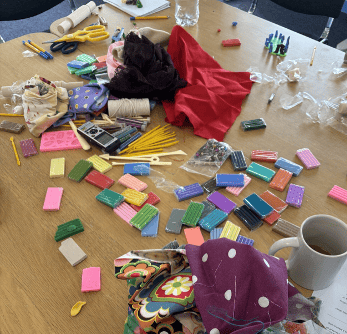
Flexibility was embedded into the research design. When participants expressed discomfort with being separated into generational or gendered groups, the research design was adapted. Comfort, care and relationality were prioritised over methodological neatness.
Implications for alcohol policy and practice
These findings challenge how alcohol harm is understood and addressed. They suggest that:
- Alcohol consumption cannot be understood in isolation from family relationships, culture and community identity.
- Intergenerational influence is reciprocal, not one-directional.
- Individualised alcohol interventions may not be suited to communities where care and responsibility are shared across families.
For policymakers and practitioners, this points to the need for intergenerational, community-based approaches to alcohol education and harm reduction – approaches that support dialogue within families, and avoid reinforcing stigma.
Conclusion: Listening differently to reduce harm
Alcohol use in Romany Gypsy and Traveller communities is relational, and shaped by intergenerational care, social change and structural inequalities. Understanding this requires different research practices.
If alcohol policy and support services are to reduce harm effectively, they must move beyond individualised models and engage with families and communities.
Call to action
Alcohol researchers, policymakers and service providers should invest in participatory, culturally sensitive approaches that centre intergenerational relationships and community expertise. Doing so is essential for meaningful and lasting change.
Written by Dr Samantha Wilkinson, Reader in Youth Geographies, Manchester Metropolitan University, and Dr Catherine Wilkinson, Reader in Childhood and Youth Studies, Liverpool John Moores University.
All IAS Blogposts are published with the permission of the author. The views expressed are solely the author’s own and do not necessarily represent the views of the Institute of Alcohol Studies.