
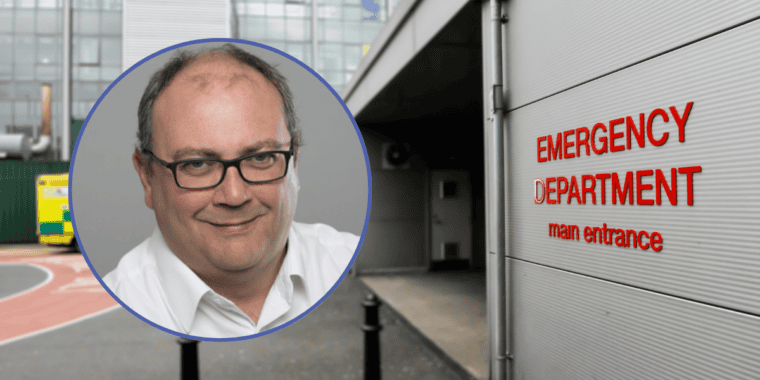
Violence is a significant public health issue. It costs the NHS over £2.9 billion each year treating and supporting those affected by violence, and there are long-term effects on individuals, families and communities.
Many of those who are seriously injured by violence will go straight to A&E. A&E is therefore a sensible location in which violence prevention can be implemented. However, staff in A&E are exceptionally busy, they do not necessarily have time to take on additional tasks.
Opportunity
The opportunity to develop violence prevention in A&E was recognised in South Wales. Using resources made available by the Home Office, and the South Wales Police and Crime Commissioner, Violence Prevention Teams (VPTs) were established in two hospital A&Es. One in Cardiff, in the University Hospital of Wales, and the other in Swansea, in Morriston Hospital. The VPTs were staffed by nurses and advocates who were part of the A&E clinical team. Because they were part of the clinical team, they had legitimate access to patient records and were able to therefore have direct contact with any patient who arrived in A&E who was injured by violence. In spending time with patients, they were able to build trust and work out how they could best help them.
Working with survivors
Violence is a broad term and covers everything from fights in nightclubs, through to domestic violence and the violence used to exploit young people. For many patients, but not all, there can be vulnerabilities that increase the likelihood that they will experience violence, for example alcohol dependency, the use of illegal drugs, and psychiatric illness. The VPTs understood this and therefore developed support and referral opportunities for patients that matched their needs and helped them access that support. This, we think, is an important aspect of the VPTs success. Simply advising a patient to contact drug and alcohol services, for example, means they may then have to explain the events surrounding that referral again and, for some, it can re-traumatise them. Instead, the VPTs worked with other services and ensured that they were aware of the patient’s needs in advance and that the patient’s journey was seamless. Patients did not feel like a “cog in a machine.”
Proper evaluation is essential
It is important that any new service in the NHS is carefully evaluated. There is little point spending money on a service that is not effective when that money could be spent elsewhere with greater effect. We were therefore keen to properly evaluate the VPTs to work out if they helped patients and saved the NHS money. First, we needed to carefully think through how the VPTs worked and what measure best described whether they were effective.
Interestingly, the vulnerabilities that increase the likelihood that someone experiences violence, and the vulnerabilities that the VPTs sought to address, are also associated with a higher number of A&E visits. If someone received effective support for their alcohol use, mental health, or drug use, then we would not only expect the likelihood that they experience violence to reduce, but also that they would visit A&E less frequently. From the perspective of the NHS, it therefore made sense to use the number of A&E visits to work out whether the VPTs were effective.
Talking to practitioners
First, however, we wanted to take a close look at how the VPTs were developed and worked in A&E, so we talked to many people who were directly or indirectly involved with setting up, implementing, or working with them.
Unsurprisingly, VPTs had provisioned support for patients with alcohol, drugs and mental health issues. What was surprising, however, was the range of vulnerabilities they were identifying. They recovered information about drug gangs’ exploitation of young people, found cases involving modern day slavery, child criminal and sexual exploitation, and made referrals into Prevent, a service that prevents vulnerable people from being drawn into extremism.
Interventions fail
We knew that efforts to introduce programmes into A&E often fail, the clinical team simply does not have capacity to take on additional work. But because the VPT staff were familiar with the way A&E worked they quickly became accepted and trusted champions for violence prevention. Not only are A&Es busy, but agency staff also come and go, trainees rotate through. The VPTs responded to this by continuously providing training to staff, and this had a broader impact that improved safeguarding generally in A&E. This qualitative work meant that we were now in a place to thoroughly consider how we were going to understand the effectiveness and cost effectiveness of the VPTs.
Working with the SAIL databank we had access to anonymous health data for the whole of the Welsh population. Using this, we could identify patients who had received support from the VPTs and find other similar people who had also experienced violence and attended A&E to compare them to. Working with such large volumes of data is a complicated task, and it was important that we deepened our understanding by not only drawing in expertise from clinical colleagues, but also patients who had experience of attending A&E due to violence.
Talking to patients
Most people, at some point in their life, will likely find themselves in A&E. However, many of the patients who were being supported by the VPTs came from vulnerable and hard to reach groups. We therefore reached out to charitable organisations that work with some of these groups: BAWSO (a charity supporting minority ethnic groups and refugees who experience violence), The Wallich (a charity supporting those experiencing homelessness), and Welsh Women’s Aid (a charity supporting those who have experienced domestic violence). They helped us contact their clients, people with experiences directly relevant to our work, and this Public Patient Involvement (PPI) group greatly influenced our thinking.
We heard from those who believed injuries from violence were normal, having been through A&E several times they eventually had contact with a trained counsellor whose support led them to safety. There were those whose childhood sexual and violent abuse forced them onto the streets and to alcohol and other drugs. Those who avoided scrutiny because they feared social services would take their children away. Their openness made something very clear, it was wrong to think that someone’s vulnerability to violence was just due to alcohol use, or just other drug use. These vulnerabilities are complicated and this was reflected in how the VPTs worked. The VPTs focused on the patient, not the problem.
Those with lived and living experience also asked us to look at some additional questions in our evaluation. This work is ongoing, but there are two worth mentioning. First, how many people are unwilling to tell A&E staff that their injuries are violence related. Second, to look at how neurodiversity, alcohol and other issues influence the likelihood of violence.
Improving access
We knew that the VPTs made a special effort to talk with patients who they suspected had been injured by violence. What was surprising though, and mirroring what the PPI group had told us, were the number of people who only disclosed their experience of violence when the VPTs spent time with them. Ethnic minority groups, men, young people and those living in deprived neighbourhoods were particularly reluctant. The only patients who did not have access to the VPTs were those under 11 years of age, they are supported by specialist paediatric physicians, so we already knew VPTs provided equitable support. We now believe that the VPTs are also making a significant contribution in improving access to health and support for these harder to reach groups.
Effectiveness and cost-effectiveness
The effectiveness and cost-effectiveness work is mind-bogglingly complex, but fortunately the results are a lot easier to describe. Using the anonymous data previously mentioned, we identified the patients who had received support from the VPTs. We then found very similar, control patients who had also experienced violence, but not received support from the VPTs. Compared to the control patients, VPT patients’ frequency of A&E attendance fell by 5%. This effect was greater for young people and women, whose frequency fell by up to 20%. We also found that VPT patients were less likely to visit their GP after they had received support. We then worked out how much the VPT cost to deliver, and how much it cost the NHS to treat patients attending A&E due to violence. The reduced A&E visits saved the NHS more money than it takes to run the VPTs, with our recent cost-effectiveness analysis finding that, on average, VPTs save the NHS over £400 per patient compared to standard care. Over 150,000 people attend A&E due to violence in England and Wales each year.
Conclusion
Overall, our results suggest that the Violence Prevention Teams in A&E improve the health of patients who experience violence and they improve access to support for vulnerable and hard to reach groups. The Violence Prevention Teams therefore help the UK Government deliver on policies concerned with preventing violence and improving access to healthcare.
Written by Professor Simon Moore, Director of the Violence Research Group, Cardiff University.
All IAS Blogposts are published with the permission of the author. The views expressed are solely the author’s own and do not necessarily represent the views of the Institute of Alcohol Studies.