
In this month’s alert
Lancet Commission calls for urgent action on alcohol harm
A major new report from The Lancet Commission on Liver Disease has issued a stark warning: liver disease is rising across Europe, and governments are failing to act on the evidence.
The Commission highlights that liver cancer deaths have increased by more than 50% since 2000, while cirrhosis remains a leading cause of preventable death. Alcohol is a key driver – not just of liver disease, but of a wide range of harms including cancer, heart disease, and injuries.
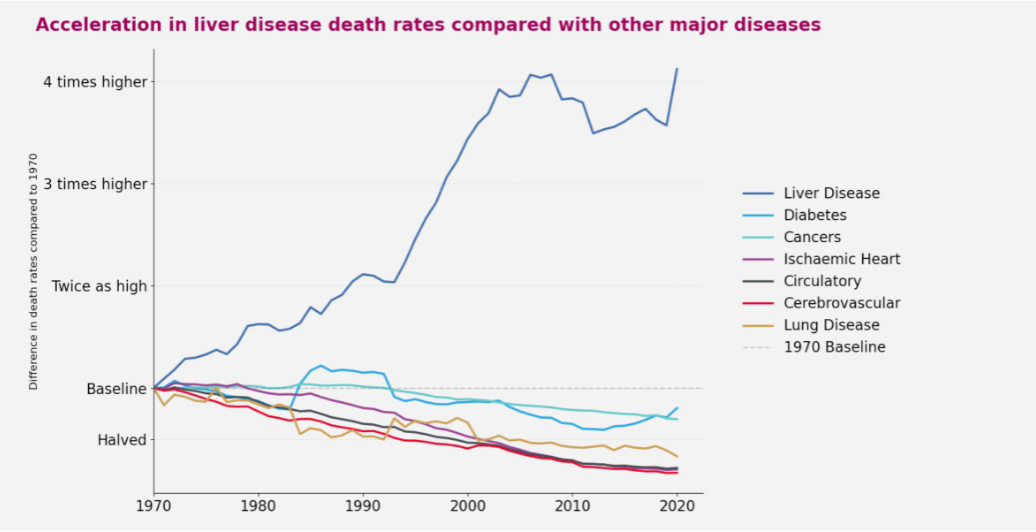
For the UK, the findings are particularly concerning. The UK already has some of the highest liver disease mortality rates in Western Europe, and it is one of the few major conditions where deaths are still increasing rather than falling, as the British Liver Trust chart below shows. Despite this, progress on effective alcohol policies has stalled in recent years.
The Commission sets out clear, evidence-based solutions, including stronger restrictions on digital marketing, improved health warnings, aligning alcohol taxes with the true cost of harm, and protecting public health policymaking from industry influence.
In a statement, IAS wrote that:
The Commission is right to stress that this must begin with excluding the alcohol industry from public health policymaking. Yet we are still seeing industry actors invited to shape licensing policy, which exists to protect public safety, not commercial interests. In addition, industry self-regulation of marketing means children remain exposed to harmful content.
A central recommendation is to better align alcohol taxation with the real cost of harm. Alcohol places a substantial burden on the NHS, the criminal justice system, and wider society – but current tax rates fall far short of covering these costs, particularly those linked to cheap supermarket alcohol.
Read IAS’s full statement here.
Scottish party manifestos vary considerably on alcohol policies
All of the main parties in Scotland have published their election manifestos, with the election taking place on 07 May and all 129 seats in the Scottish Parliament up for grabs.
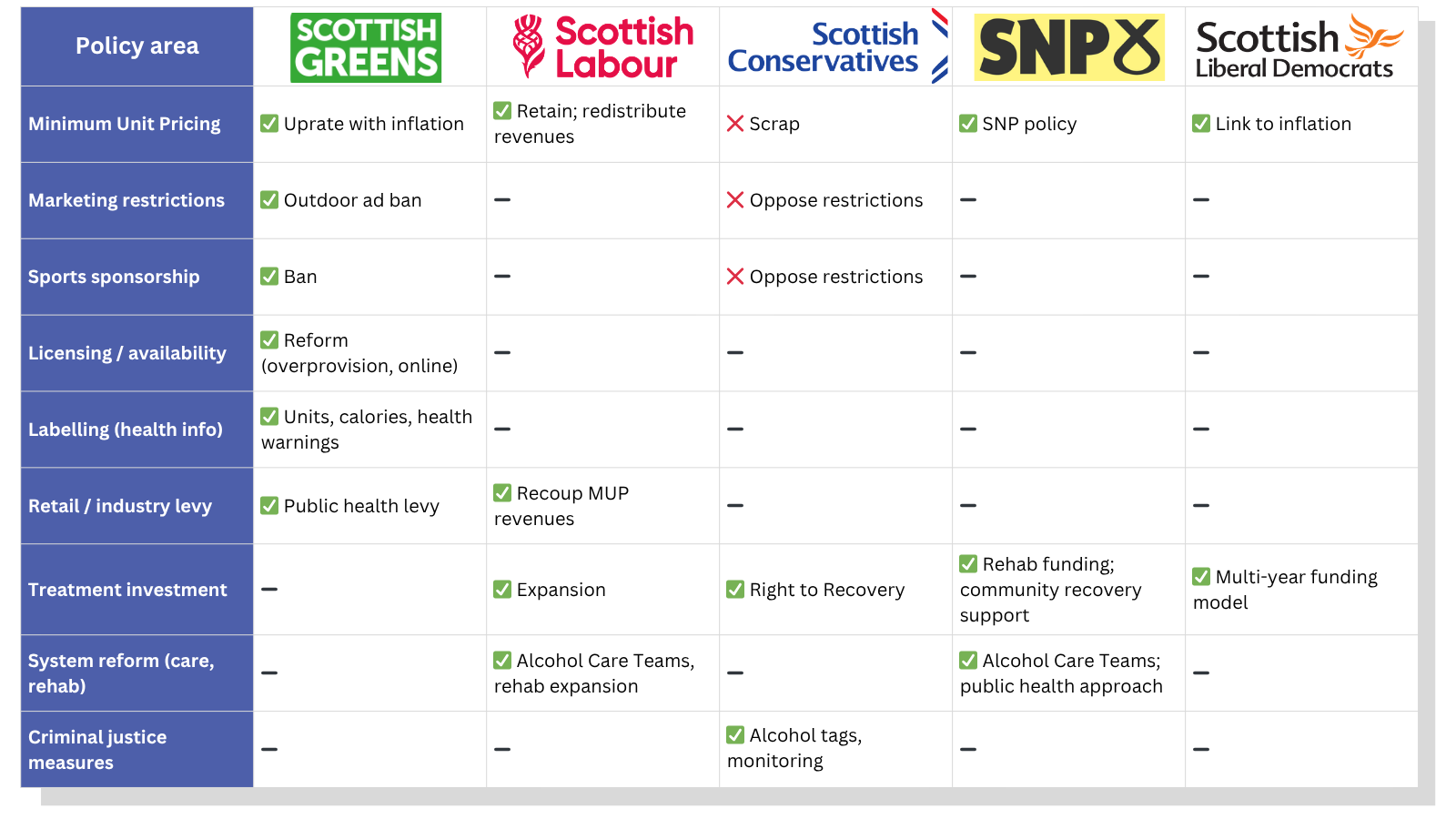
On alcohol policy, commitments vary. The Scottish Greens have pledged to keep the minimum unit price in line with inflation, as well as ban alcohol marketing and sports sponsorship. The Scottish Conservatives have promised to take quite a different approach, stating that they will scrap minimum unit pricing and instead focus on treatment funding and the introduction of a Right to Recovery law. Please see below for a snapshot of party commitments. Reform UK candidates are standing, however the party hasn’t mentioned alcohol in its manifesto.
In related news, a Health Foundation article argues that these manifestos “fail to advocate for the step change in policy that would support a healthier, more equal Scotland”.
David Finch writes that their focus on boosting economic growth fails to recognise that to do so, improving health is essential. He argues that Scotland has to build on the success of MUP and strong tobacco regulation by:
strengthening restrictions on marketing, supporting local authorities to manage the density of fast-food outlets and off licences, expanding smoke‑free public spaces, and ensuring that public health policymaking is not undermined by commercial interests.
UK Government issues call for evidence on alcohol duty reforms
The Treasury and HMRC are evaluating the impact of the 2023 alcohol duty reforms, particularly to see if they have achieved their objectives of:
- Greater consumer choice, particularly of low-strength products.
- Reduced alcohol related harm.
- Support for on-trade business via Draught Relief (DR), which was designed to reduce the tax burden on draught alcoholic products under 8.5% ABV sold in on-trade venues, such as pubs.
- Support for small producers via Small Producer Relief (SPR), which extended the duty relief previously only available to small brewers to all small producers of alcoholic products under 8.5% ABV and addressed barriers to growth by smoothing the withdrawal of relief as production increases.
- Reduced administrative burden and a simplified process for users.
They’re looking for responses from producers, public health groups, and others, on changes in product strengths, trends in alcohol harm, and other impacts. Respondents should send quantitative data and evidence in writing to alcoholevaluation@hmrc.gov.uk by 01 June 2026.
Alcohol trade groups have recently been raising concerns about the duty reforms and duty rates, claiming without evidence that both have led to reductions in Treasury revenue. The Wine and Spirit Trade Association has stated that the review “provides a clear opportunity for a major re-think as part of the 2026 Autumn Budget”.
A group of eight trade bodies representing spirits issued a statement calling out the “devastating impact” of increases to duty, and that: “our organisations are united in our call for the review to be as comprehensive as possible, and for the autumn Budget to take steps to support the UK’s world-class spirits industry”.
The best available evidence on the topic, by researchers Colin Angus and Jonas Schöley, found that there has been a decline in expected duty receipts in recent years, but that this was happening before the duty reforms or recent increases to duty rates, and instead attributed it to the cost of living crisis.
Tougher restrictions on rapid delivery apps desperately needed
There are growing calls for the government to introduce restrictions to rapid online delivery of alcohol, as stories begin to emerge of rising harm.
Alex Hughes – whose sister died from alcohol at the age of 35 – discovered that she had been spending huge amounts of money each month getting alcohol delivered to her door. Alex says that the ease with which her sister could access massive amounts of alcohol via delivery apps helped enable her addiction.
It took her social life, she didn’t really need to get ready for the day because she had nowhere to go because the delivery apps were on standby to deliver the alcohol to her. Eventually all that did was isolate her to her home.
For me personally, a shop opens at a certain time and shuts at a certain time, these delivery apps don’t. They are like a drop and go service.
They’re also not adhering to their policies. There’d be times when Zoe was essentially passed out from the alcohol and it was just left on her doorstep, so nobody was really casting an eye over her to make that judgement of should she be served, or should she not.
Alex has launched a petition, which has over 18,000 signatures, calling on the government to ban alcohol on delivery apps, or at the very least introduce regulation to restrict it.
Naushabah Khan MP has joined calls for tighter restrictions after a man in her constituency died from alcohol-related liver disease following spending up to £60 a day on alcohol deliveries from Uber Eats.
The man’s daughter said that if it wasn’t for Uber Eats her dad would still be here.
Khan said:
I will be raising this with the Prime Minister and the Secretary of State, and I will be pushing for legislative change, so that our laws reflect the reality of modern life and protect vulnerable people across our communities.
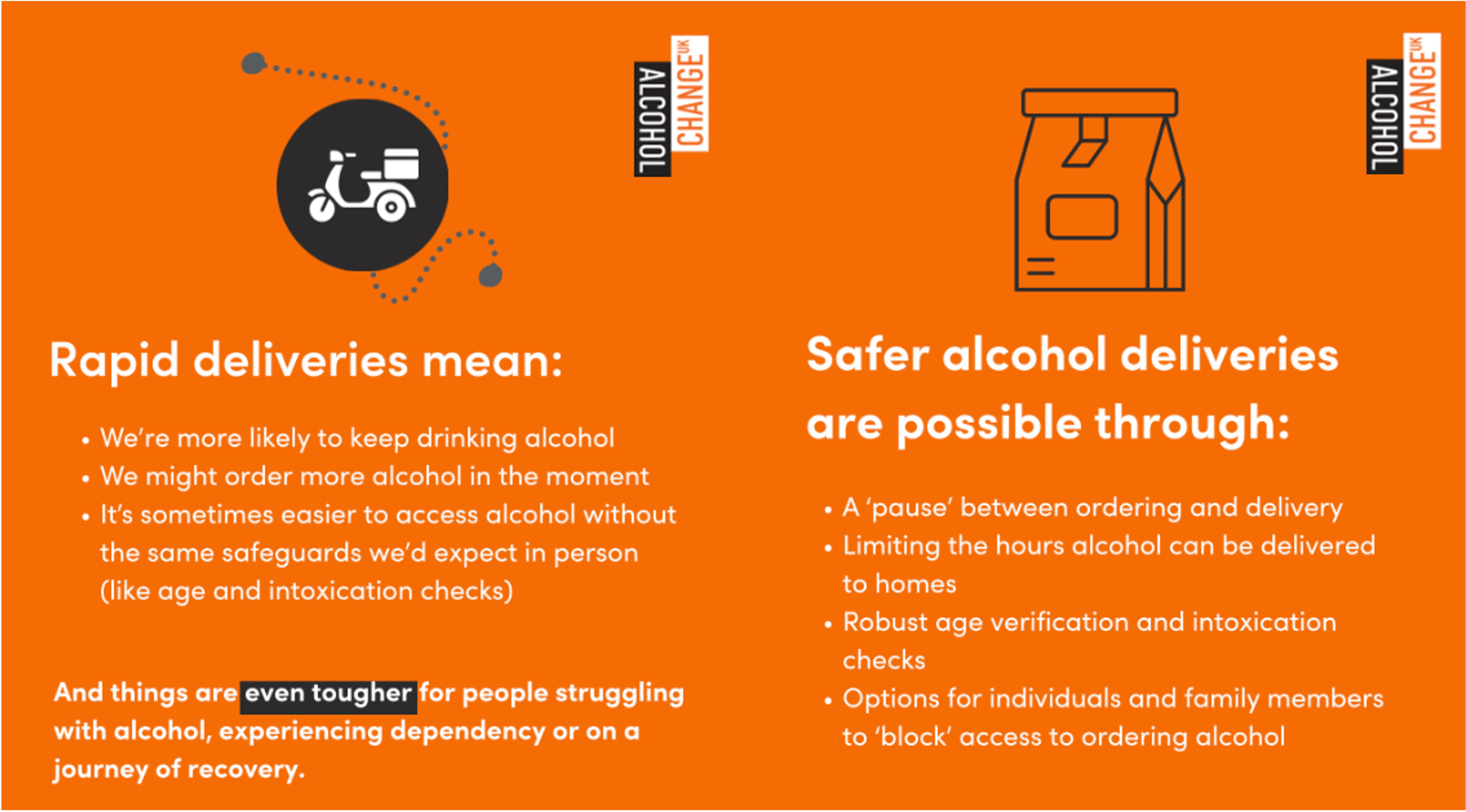
Alcohol Change UK has launched a campaign called End the delivery trap, which calls for regulation that: delays the time between order and delivery, restricts the hours alcohol can be delivered – for instance between 10am and 10pm only, and makes it easier for people and their families to block access to such apps.
The charity’s Chief Executive Dr Richard Piper said:
This is not a niche problem. Rapid delivery has quickly become a part of daily life in the UK and a significant driver of dangerous alcohol consumption. Too many are falling prey to round-the-clock access through these services.
Their campaign urges the public write to their MP and push the government to “take immediate action” to reduce harm.
Alcohol giants shift strategy to cheaper, mass market products
Premiumisation – the idea that people might drink less but ‘better’ (or at least more expensive) – has long been one of the few areas where alcohol industry strategy appeared to overlap with public health goals. But new analysis from industry analysts IWSR suggests that era may be ending.
With falling consumer confidence and declining alcohol spend in 2025, IWSR states that the industry is now shifting focus away from premium products and towards volume growth – in other words, selling more alcohol.
As IWSR’s Marten Lodewijks stated:
The major multinational spirits players, whose prior strategies centred chiefly on continued premiumisation, are now shifting tack. Recent restructuring and leadership changes indicate a greater focus on volume, relevance and more evenly weighted portfolios across price tiers, rather than margin expansion.
This follows news in February that Diageo’s new CEO Sir Dave Lewis aims to tap into the lower end of the market, as well as targeting young people with ready-to-drink (RTD) products, stating that:
Young people are choosing RTDs, but they’re choosing RTDs with higher ABV, which gives some indication of their attitude towards this category. We believe there’s a very significant and profitable opportunity for Diageo in RTDs, but we have work to do.
At the same time, the same companies continue to promote ‘responsible drinking’ and reducing harmful use through their CSR programmes. It begs the question, is this an industry genuinely committed to reducing harm – or one doubling down on selling as much as possible in tougher economic times?
35% fall in adolescent intoxication due to Lithuania’s full alcohol marketing ban
A new study has found that Lithuania’s full national ban on alcohol marketing led to a 35% reduction in frequency of intoxication among 15-16 year-olds.
The study in BMJ Public Health compared this age group in Lithuania to five EU comparator countries, Estonia, France, Italy, Latvia, and Poland, across four survey waves from 2007-2019.
Predicted intoxication rates were nearly twice as high without the ban, which was also found to reduce heavy episodic drinking by 18% and overall alcohol consumption by 12%.
These changes appeared within just over a year of the ban taking place, showing how fast marketing bans can work to reduce harm.
Frequency of intoxication among adolescents, across 6 countries 2007-2019
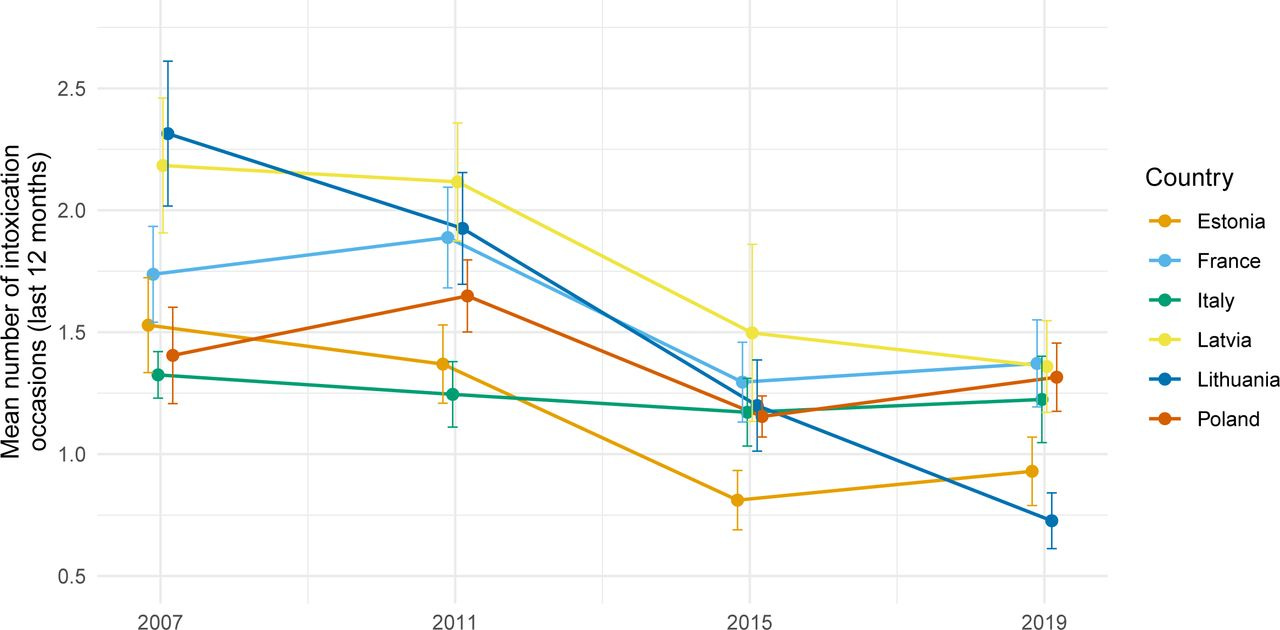
The researchers write that:
The findings suggest that without the marketing ban, Lithuania would not have recorded the lowest intoxication rates among the six countries in 2019, despite broader alcohol policy efforts… While this short-term reduction is encouraging, the longer-term implications may be even more far-reaching, as future cohorts who grow up with little to no exposure to alcohol marketing may develop entirely different norms and expectations around alcohol.
The findings underscore that full marketing bans that prohibit all national alcohol advertising and sponsorship are considerably more effective than partial marketing restrictions. This is not surprising given the limitations of partial marketing restrictions. History shows that anything short of a full ban often leads to a shift in marketing to unregulated channels, platforms or time slots, creating an adaptive environment where exposure persists or even increases.
Scotland’s Commonwealth Games conundrum
When the Commonwealth Games arrive in Glasgow this July, they will bring world-class sport to a city with much to celebrate – but also some difficult conversations to navigate.
Sponsorship deals with Jubel beer and Coca-Cola have drawn criticism from public health advocates, who argue that the partnerships send the wrong message for a city with the highest alcohol death rate in Scotland. The NCD Alliance Scotland – whose members include Alcohol Focus Scotland, Obesity Action Scotland, and ASH Scotland – has written to Games CEO Phil Batty OBE requesting a meeting to explore how the event might make a “lasting shift away from associations with health-harming products”.
Alliance Chairman David McColgan acknowledged the organisers’ positive steps, including smoke and vape-free family zones and free drinking water, but raised concern about younger audiences:
Evidence shows that young people are likely to start drinking earlier and consume more the more often they are exposed to alcohol marketing, and the Coca-Cola brand risks shaping the perceptions and preferences of children watching the sports.
Organisers have described the Jubel partnership as being about “shared moments, community and celebration”, and commercial sponsorship remains a practical reality for events of this scale. But researchers like Dr Robin Ireland of the University of Glasgow warn that sport’s power to influence behaviour cuts both ways – boosting the profile of unhealthy products just as effectively as it inspires athletic ambition. He writes that sponsorship allows unhealthy industries to profit “at the expense of both environmental and human health,” urging viewers to enjoy the sport—but remain critical of the messaging.
Over 100,000 UK jobs could be created by reducing alcohol consumption, finds OECD
New OECD analysis on non-communicable diseases (NCDs) in the UK makes for striking reading.
The report benchmarks the UK against the best-performing quarter of OECD and EU countries on each risk factor – i.e. the “top quartile” – to show what’s achievable if the UK matched those leaders. It’s an ambitious but realistic yardstick: these are levels other countries have already achieved.
On alcohol, the findings are stark. ‘Harmful drinking’ is one of the top three risk factors driving premature deaths, healthcare costs, and lost productivity in the UK – sitting alongside obesity and unhealthy diet. NCDs as a whole account for 46% of all premature deaths (before age 75), and the drain on the workforce is enormous: the equivalent of over 1.3 million full-time workers lost to illness, absenteeism, and early death.
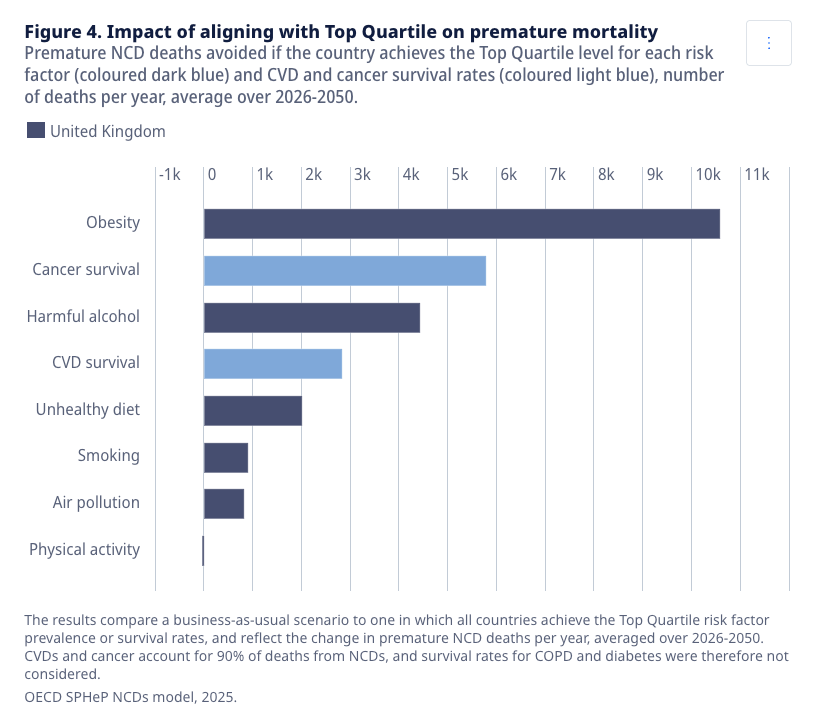
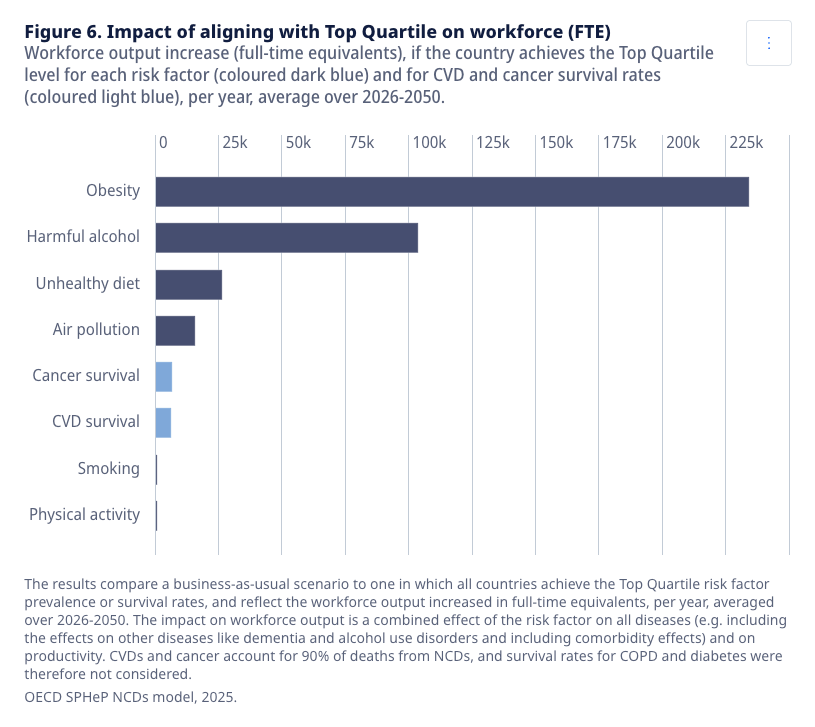
Aligning alcohol consumption with the top quartile of countries could prevent 4,400 premature deaths in the UK every year, as the first figure below shows, and create over 100,000 full-time equivalent jobs, as the second figure shows. This is partly because people dying from alcohol tend to die much younger than from many other risk factors, meaning the impact on working life years lost is much higher.
The gains from tackling alcohol – alongside diet and obesity – are substantial. Those three priorities alone deliver 95% of the potential GDP benefit from NCD prevention: a 1.5% annual boost to GDP over 2026-2050, hundreds of thousands of additional full-time workers, and billions saved in healthcare spending. Reducing harmful drinking to top-quartile levels would also cut homicides by 7.1% and road traffic accidents by 8.5% – a reminder that the costs of alcohol harm extend well beyond the NHS.
Teens are three times more likely to start with alcohol rather than no- and low-alcohol alternatives
A study by the University of Sheffield and University College London for Alcohol Change UK has found that alcohol remains the default for young people, with 16–25-year-olds three times more likely to start drinking alcohol than no- or low-alcohol alternatives (62% vs 17%).
Only around 15% reported recent use of no/low drinks, which are widely seen by both young people and parents as products for adults rather than adolescents.
While adult attitudes toward underage use of no/lows are mixed – for instance, more acceptable in family settings – actual use among teens is rare, with most preferring either alcohol or soft drinks.
The study found no evidence that no/lows act as a “gateway” to drinking, which is relevant as the government stated in its 10 Year Health Plan that zero alcohol drinks could be banned for under-18s due to concerns that they may be a gateway to drinking alcohol. Crucially, however, the study authors explain that the reason for no/lows not being a gateway is that alcohol is already so normalised among adolescents, that these products don’t need to act as a gateway. They wrote that no and low alcohol drinks:
did not appear to accelerate the trajectory towards standard alcohol consumption as this was already culturally embedded, with several primary carers stating they believed it was inevitable that their child would drink alcohol as they progressed into later adolescence.
In related news, the Behavioural Insights Team at Nesta has conducted large-scale trials across the UK, Mexico, and Germany, which show how simple ‘choice architecture’ changes, like moving alcohol-free options to the top of a menu, can reduce alcohol consumption by up to 24% without compromising revenue.
The online trial served different menus to participants, who then clicked what they would order, and checked out. Some would see a standard menu as a control, others might see a menu with the no/low options moved to the top of a menu (first image below), or a particular framing message such as on safe driving (second image below), or a menu with additional no- and low-product options.
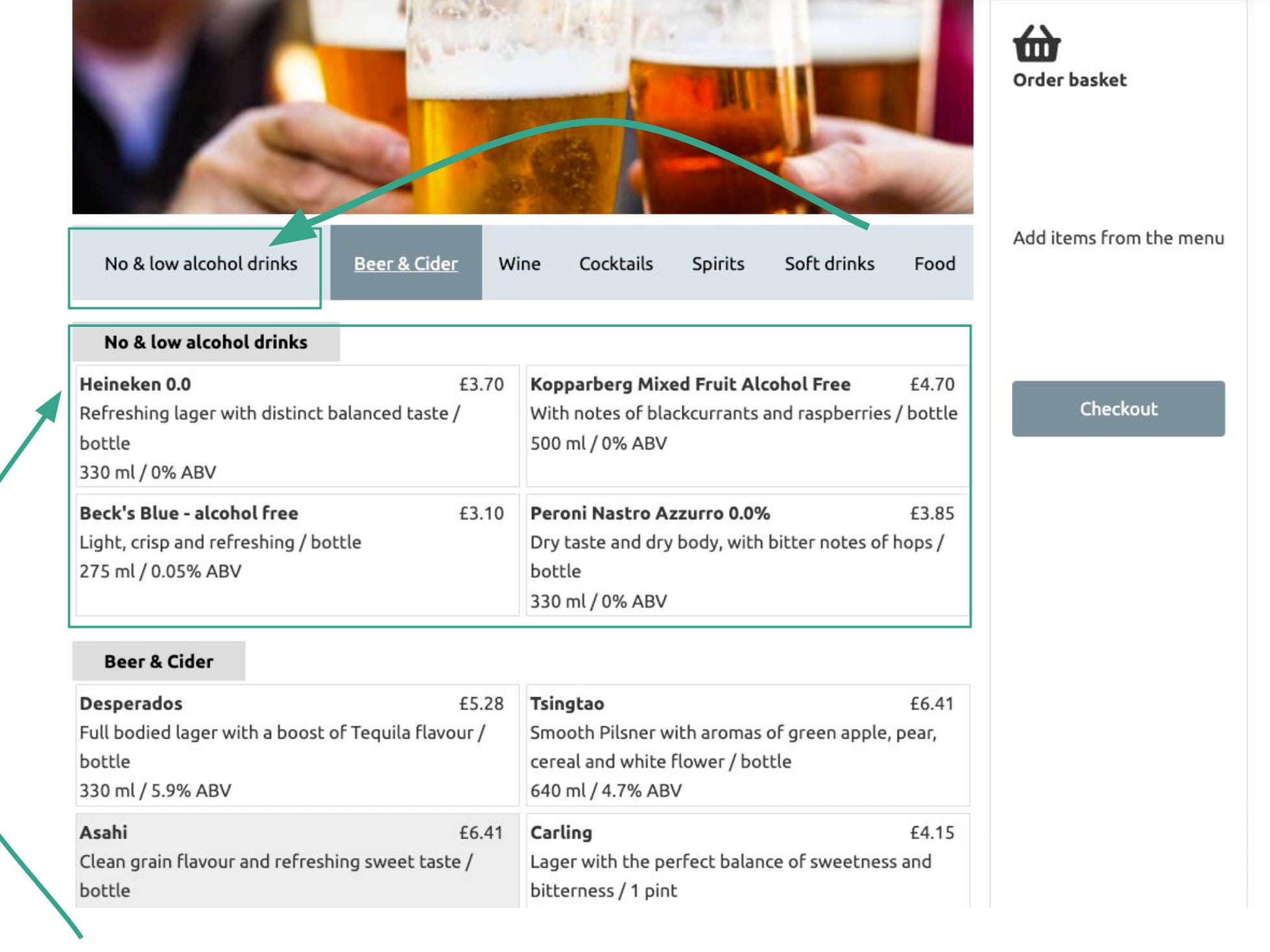
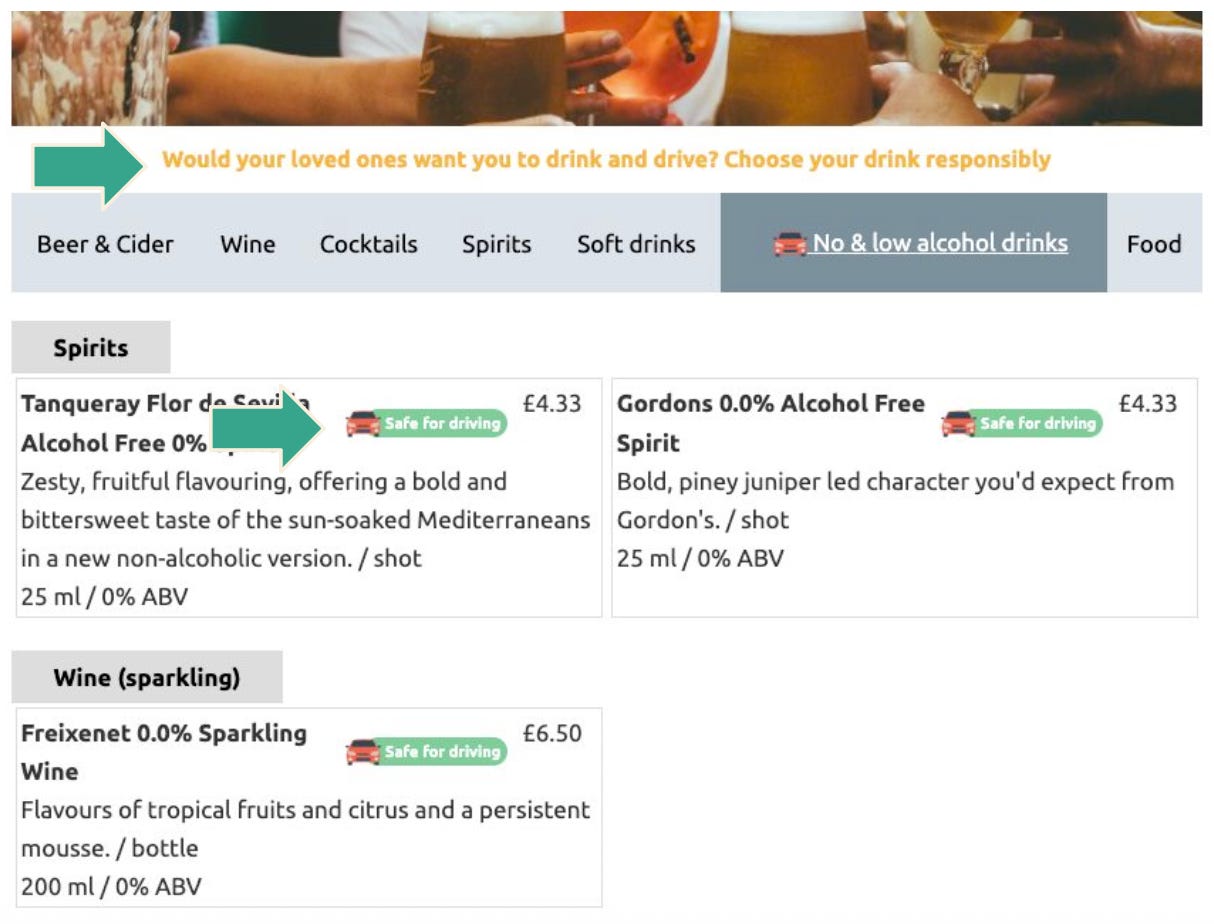
Moving the products to the top of the menu had the biggest effect in reducing orders of full strength products, with the UK trial showing a drop in average alcohol volume ordered from 30.51ml in the control group to 26.01ml in the group that saw zero and low alcohol products at the top of menus.
Their ‘alcohol substitution playbook’ distils the findings into a practical guide for using no- and low-alcohol beverages as a tool for alcohol substitution and outlines the evidence-backed strategies needed to make the healthier choice the easier one.
Alcohol Toolkit Study: update
The Alcohol Toolkit Study is a long-running survey of alcohol consumption in England, Scotland, and Wales. The English monthly data has been collected since March 2014, and the Scottish and Welsh data from mid-2021. Each month involves a new representative sample of adults aged 16 and over.
You can find further charts and data for each country here:
· England
· Scotland
· Wales
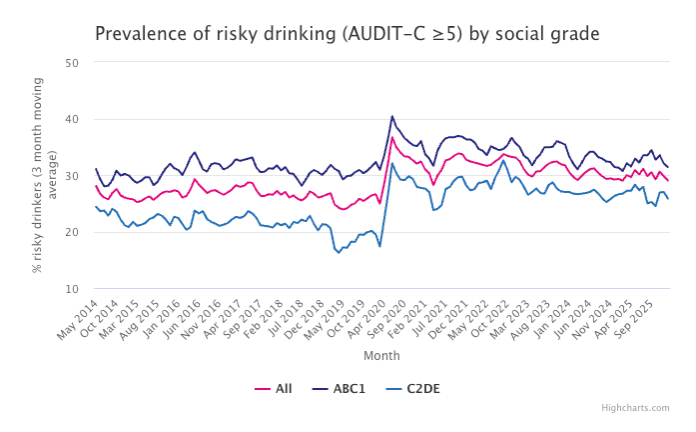
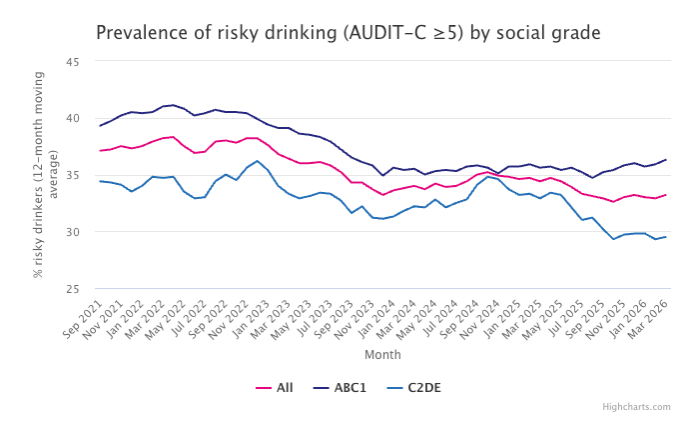
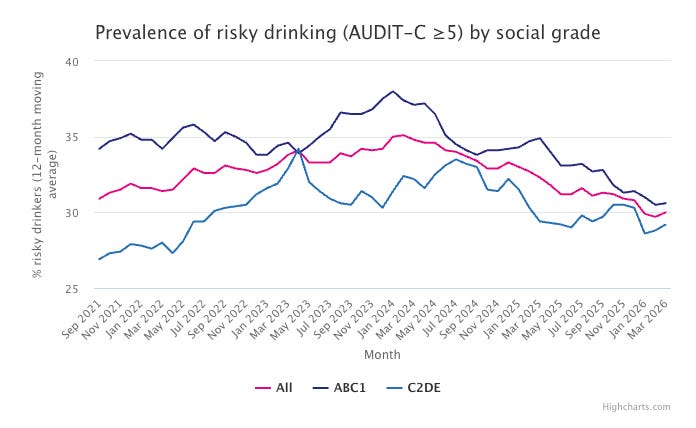
The following charts are a snapshot of the prevalence of risky drinking by social grade.
Prevalence of increasing and higher risk drinking (AUDIT-C)
Risky drinking defined as those scoring AUDIT-C ≥5
ABC1: Professional to clerical occupation; C2DE: Manual occupation
England
Scotland
Wales
Podcast
Our monthly podcast features interviews with experts from across the sector.
The Tobacco and Vapes Act – and how alcohol is being left behind
Ailsa Rutter –
Director of Fresh and Balance