

Alcohol-related liver disease (ARLD) is a major, preventable cause of death. In 2021, it was estimated to cause over 350,000 deaths globally. Since the COVID-19 pandemic, England has seen a worrying rise in deaths caused by alcohol. Much of this increase has been driven by ARLD, the leading cause of alcohol-specific deaths in the country.
Our study, published in the Journal of Epidemiology & Community Health, shows that this crisis is far from over: deaths from ARLD remain high. More concerning still, many of those dying had not been in hospital care in the year before their death.
Context
ARLD is a chronic disease that can develop without symptoms in its early stages. Stopping drinking can prevent further liver damage, making early detection key to timely intervention. Yet, diagnosis often comes late, typically at a patient’s first hospital attendance when the disease is already advanced. This leaves fewer opportunities to intervene and improve outcomes.
Since the COVID-19 pandemic, the NHS has struggled with “aftershocks”, including longer wait times and a shift in resources away from community and preventative care. While overall trends in ARLD deaths are well documented, we know much less about where people have died since the pandemic and whether they had been treated in hospital beforehand. Understanding these trends can help reveal whether opportunities to treat people have increasingly been missed, and where prevention and policy efforts are most needed.
What we did
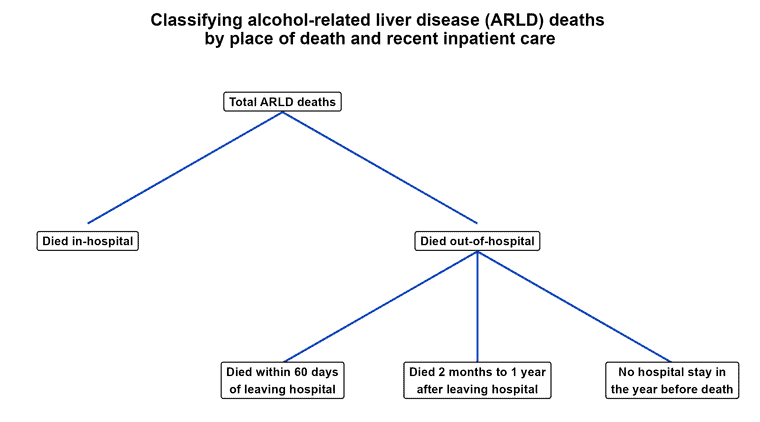
We analysed two decades of English health records from January 2004 to December 2024 to track deaths where ARLD was the underlying cause, or in secondary analysis, a contributing cause. Using linked national death records and hospital admission data, we were able to investigate not just how many people died and when, but whether those people had been admitted to hospital recently and, if so, for what reason.
What we found
In total, 97,058 ARLD deaths were recorded among adults aged 25 to 84 over the study period. The mean age at death was 56 years.
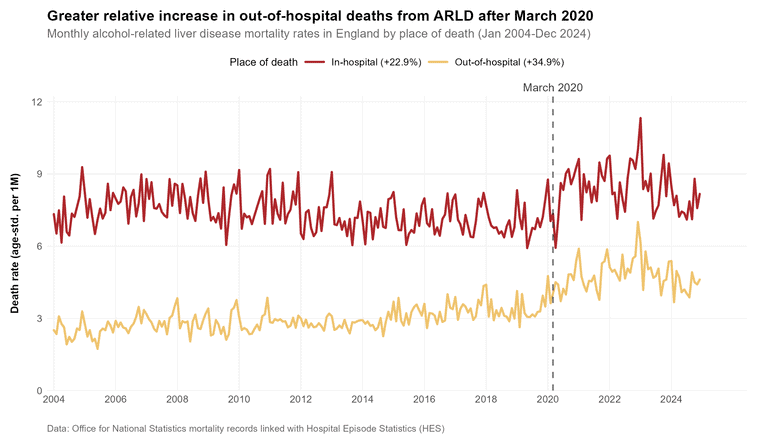
For 16 years before the pandemic, death rates from ARLD were stable. However, starting in March 2020, death rates jumped by 28%, and they stayed elevated through the end of 2024. That translates into an estimated 5,571 ‘excess deaths’ – deaths above what would have been expected if pre-pandemic trends had continued.
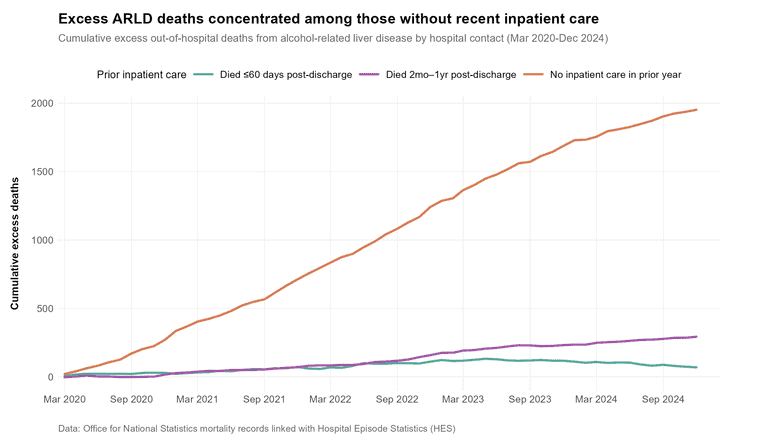
Notably, the increase was not spread evenly between people who died in hospital and people who died elsewhere (for example, at home or in a care home). Deaths outside hospital rose by 35%, compared with a 23% rise among people who died in hospital. Within the out-of-hospital group, the sharpest increase was among people with no record of an ARLD-related hospital stay in the year before their death: deaths in this group rose by over 60%.
In fact, more than a third of all excess ARLD deaths since the pandemic occurred in people with no hospital stay of any kind in their final year of life. This suggests that opportunities for hospital-based identification and treatment were limited. Some people may have had contact with primary care, outpatient, or community services, which these data do not capture.
Importantly, these trends held even when we excluded deaths where COVID-19 was also recorded as a cause, confirming that the rise reflects a genuine increase in ARLD deaths, not just the wider surge in COVID-19 deaths at the time.
Who was hit hardest?
The findings echo alcohol-related harm patterns from before the pandemic: men, middle-aged adults, and people living in more deprived areas continued to bear the highest burden, as did residents of the North East and North West of England.
But when we looked specifically at where people died, some new patterns emerged: women, as well as people in the North West and West Midlands, saw sharper relative increases in out-of-hospital deaths compared with in-hospital.
The West Midlands stood out in particular. Despite having among the lowest rates of high-risk drinking in England, including the lowest proportion of adults exceeding daily alcohol limits in 2022, it saw out-of-hospital ARLD deaths climb by more than 56%. However, this contrast should be interpreted cautiously, as ARLD reflects cumulative alcohol exposure over many years.
What might explain these trends
Our study cannot tell us why so many more people with ARLD are dying outside hospital, but several factors may have contributed.
First, treatment and management for ARLD were disrupted by pandemic-related lockdown restrictions, just as heavy drinkers were, on average, drinking even more. Funding for specialist alcohol treatment services was already stretched thin, and much care shifted to telemedicine. This may have created further barriers for people with limited digital access, complex mental health needs, or difficulties engaging with services.
However, the pandemic is only part of the picture. Liver disease develops over several years, meaning many of those who died in the final years of the study period likely developed serious alcohol-related problems well before the pandemic began. What may have changed is not simply the damage caused by alcohol, but whether people were able to reach, and be reached by, health services in time.
What needs to happen
This is not just a hospital problem, but a broader public health issue. Because so many of the people dying had no recent hospital stay, reaching people earlier will require better identification of risky drinking outside hospitals, including in primary care.
Stricter alcohol marketing rules and minimum unit pricing are also needed – measures notably absent from the UK government’s recent 10-Year Health Plan. There is currently no specific medical treatment that can reverse advanced ARLD once the liver has become badly damaged, although stopping alcohol use can prevent further damage and may allow liver function to improve, which makes prevention and early intervention all the more critical.
To help track the problem going forward, we’ve built an online dashboard that will update mortality trends overall and by patient demographics, place of death, and recency of inpatient care.
The bottom line
Alcohol-related liver disease deaths in England did not just spike temporarily during the pandemic and then fade: they remained elevated through the end of 2024. A large share of these excess deaths occurred among people who had not been admitted to hospital at all in their final year of life.
Reaching people means investing upstream. Evidence from Scotland shows that minimum unit pricing can reduce alcohol-related deaths. Alongside population-level prevention, expanding community and preventative services could help identify dangerous drinking and liver disease earlier, before opportunities to intervene become more limited.
You can read the full open-access paper in Journal of Epidemiology & Community Health here.
Written by Emre Oguzman, Health Data Epidemiologist, Applied Health Research Unit, Nuffield Department of Population Health, University of Oxford.
All IAS Blogposts are published with the permission of the author. The views expressed are solely the author’s own and do not necessarily represent the views of the Institute of Alcohol Studies.