
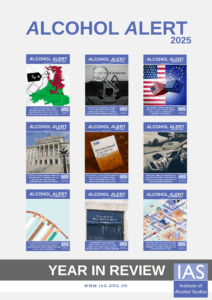
In this month’s alert
“The best lack all conviction, while the worst
Are full of passionate intensity.” W. B. Yeats
Some people might think alcohol policy is dull. But after a year of political leaks and flip-flopping, industry interference and deception, and, of course, stellar public health research, how anyone could find it boring is a mystery.
As we noted in last year’s review, many of us felt genuine optimism with the new government – particularly after repeated statements that “for too long, there has been an unwillingness to lead on issues like smoking, alcohol harm, and obesity.” And to be fair, there has been some progress.
Two consecutive Budgets that have kept alcohol duty in line with inflation is no small achievement. This hadn’t happened in the previous ten years. While rates are still far below their 2012 level in real terms, at least we’re back on a more sensible track. More could and should be done – such as linking duty rates to the cost of harm and targeting cheap, off-trade alcohol – but on that front at least, things are moving in the right direction.
The long-awaited 10-Year Health Plan also pushed alcohol labelling higher up the agenda, a cause public health bodies have long championed. It’s hard to ignore the absurdity: orange juice must list nutritional information and ingredients, yet vodka – a carcinogenic substance – requires none. Health Secretary Wes Streeting summed it up well: “It is a bit daft.”
While improved labelling alone is unlikely to substantially reduce the UK’s high rates of alcohol harm, consumers clearly have a right to know what they are drinking – and the risks involved. There’s a broad range of possibilities for what could appear on labels, including how warnings are framed and which are included. The alcohol industry, of course, will try to dilute any meaningful messaging – for example, suggesting QR codes, despite only 0.26% of consumers engaging with them. This is a textbook case of pretending to be part of the solution while actively blocking it, and we hope the government won’t be so easily fooled.
Despite these positives, alcohol remains the neglected risk factor – Cinderella left in the shadows. The 10-Year Health Plan highlighted this clearly. At the time, we called it “frankly embarrassing to launch a ‘prevention’ plan that ignores the most effective ways to prevent alcohol harm.” Sadly, it exposed a continuing “unwillingness” to lead on alcohol control. When early drafts appeared to include partial marketing restrictions – bringing alcohol in line with unhealthy food and drink – industry bodies reacted furiously and were successful in their quest to remove this life-saving measure.
Industry interference has been a recurring theme this year. Alcohol licensing came under threat from an industry-heavy Taskforce. Yet public health groups, the police, residents’ associations, and local authorities pushed back strongly against nearly all of the Taskforce’s proposals in the call for evidence. So far, the government’s next steps seem far less threatening to public health than initially feared. So, one thing the public health community does not lack is conviction, and we look forward to challenging the industry’s passionate intensity in 2026.
– Jem Roberts, Head of External Affairs, Institute of Alcohol Studies
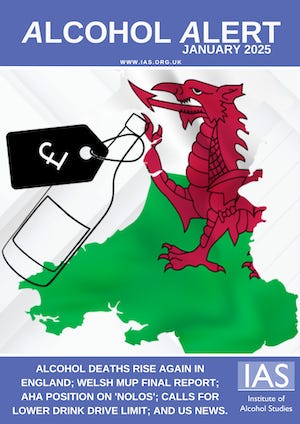
January – Alcohol deaths continue to rise
The year started rather grimly with news that alcohol-specific deaths in England had reached another record high in 2023, rising by 42% compared to 2019, with the North East overtaking Scotland’s death rate for the very first time. Across the water, the US Surgeon General sounded the alarm on alcohol and cancer risk, boosting awareness of the link.
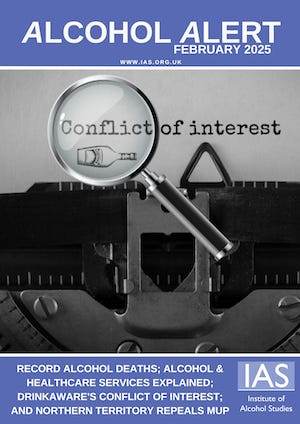
February – The conflict of interest at the heart of Drinkaware
A Private Eye investigation revealed a stark conflict of interest at Drinkaware, with alcohol multinationals pressuring the industry-funded charity to align its work with their priorities. Meanwhile in Australia, the new Conservative government of the Northern Territory scrapped minimum unit pricing (MUP) claiming it failed to achieve meaningful outcomes.
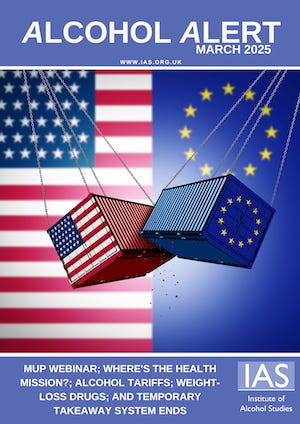
March – Where has the Health Mission gone?
The CEO of the King’s Fund questioned whether the Health Mission had gone missing. The temporary takeaway alcohol system ended, after a majority of consultation respondents said they disagreed with its continuation. And proof that even alcohol policy can’t escape Donald Trump: tariff threats on European alcohol rattled markets on both sides of the Atlantic.
April – Is ‘harmful’ alcohol use a misnomer?
An industry-dominated Taskforce is set-up to propose licensing reforms that will create growth in the hospitality sector. The Democratic Unionist Party is revealed to be blocking MUP in Northern Ireland. And two academics question whether we should stop using the term ‘harmful’ alcohol use.
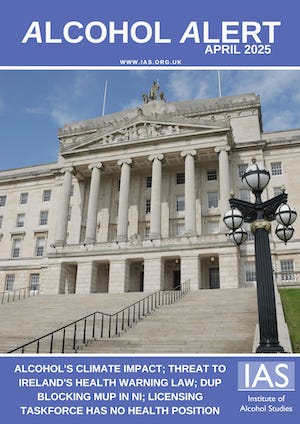
May – Methanol poisoning in Laos
The Social Market Foundation recommends a windfall tax if England introduces MUP, which could raise over £600 million. The friend of a woman who died from methanol poisoning in Laos calls for better education on the topic in schools. Alcohol-related cancer deaths found to have doubled in the US from 1990 to 2021.
June – Ireland to delay warning labels
Ireland announces it will delay alcohol warning labels, claiming the impact of tariffs, although widely perceived to be due to industry lobbying. Alcohol found to be involved in 1 in 5 complaints to the UK parliament’s complaints scheme. And a study finds that alcohol is associated with increased risk of pancreatic cancer.
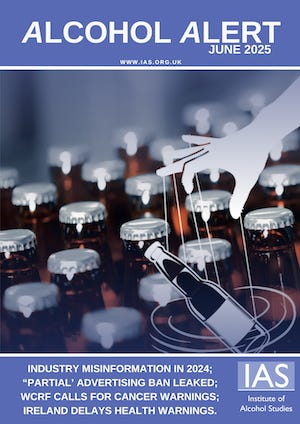
July – Failures of the 10-Year Health Plan
The much anticipated 10-Year Health Plan for England fails to include any of the three most effective policies to reduce harm, despite leaks suggesting it could. 1 million people in England found to be at risk of the ‘triple threat’ of drinking, smoking, and overweight. In parliament, the Drugs, Alcohol & Justice APPG calls for a national alcohol strategy.
August – Could the drink drive limit be reduced?
A new road safety strategy is expected to reduce the drink driving limit in England and Wales, which have the highest limits in Europe. A joint letter signed by 58 organisations calls for the Education Secretary to stipulate that schools should not use teaching materials developed by organisations funded by health harming industries.
September – Alcohol deaths fall in Scotland
A comprehensive review by Public Health Scotland concludes that, contrary to industry claims, alcohol marketing does not merely influence brand preference but leads to higher overall consumption and attracts new drinkers. In some rare good news, the latest figures show a drop in the alcohol death rate in Scotland in 2024, suggesting the pandemic impact is starting to lessen.
October – Threat of licensing deregulation
The government presses ahead with plans to deregulate alcohol licensing, accepting most of the Taskforce’s proposals, in a clear threat to public health. MSPs in Scotland vote against the legal right to addiction treatment, concluding it was not the “correct vehicle” to help those with addictions. And half of alcohol-free adverts found to break advertising rules.
November – A long-term vision to tackle alcohol harm
A long-term vision to tackle alcohol harm in the UK is published. The UK government increases alcohol duty rates by inflation at the Budget. A first-of-its-kind study in Scotland finds that ambulance staff are regularly abused and sexually harassed by intoxicated patients and bystanders. And the European Alcohol Policy Alliance, Eurocare, closes its Brussels office due to funding constraints.
Thank you for subscribing to the Alcohol Alert and we look forward to providing you with more roundups of alcohol research and policy in 2026!
Podcast
Our monthly podcast features interviews with experts from across the sector.
Humanising Healthcare’s Conversation Café: transforming medical education
Dr Hugo Jobst –
Humanising Healthcare
Dr Seonaid Anderson –
Consultant Psychiatrist
Allan Houston –
Glasgow City Council