
In this month’s alert
‘Enabling our isolation’: people in recovery call for action on alcohol delivery services
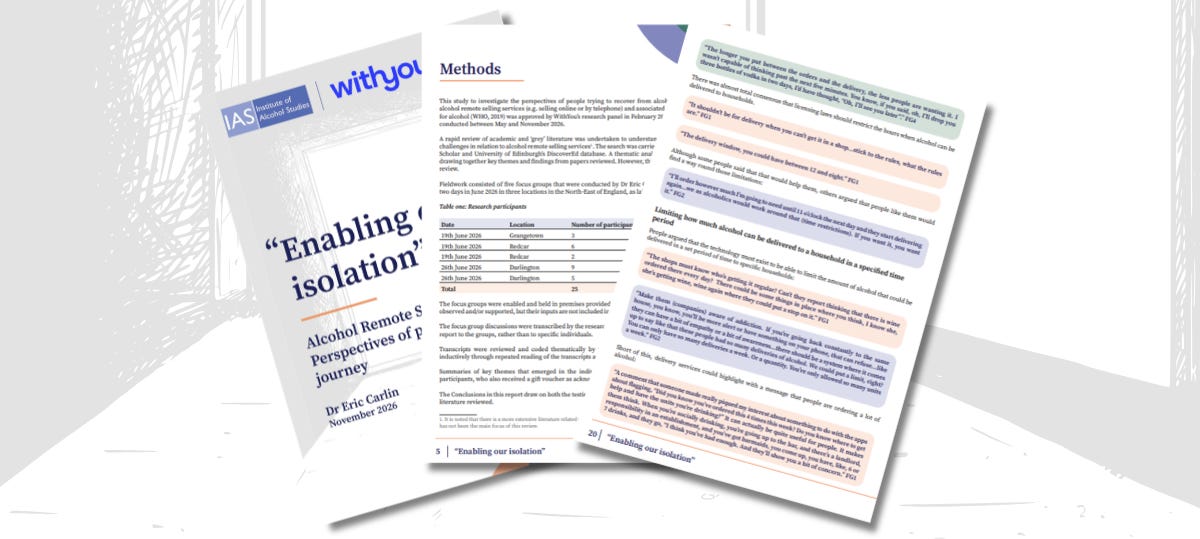
A new report from Dr Eric Carlin, funded by the Institute of Alcohol Studies and with research assistance from WithYou, explores how alcohol remote selling services affect people in recovery. Drawing on a review of the literature and focus groups with 25 people in recovery, ‘Enabling our isolation’ found that the convenience, speed and promotion of alcohol delivery services can prolong heavier drinking, reinforce social isolation and undermine recovery efforts.
Participants said that discreet home deliveries allowed them to continue drinking in isolation, even when they were too unwell to leave the house, while frequent alcohol promotions on delivery platforms and apps acted as triggers during recovery.
One participant said:
Being able to get it, these services destroyed me, and that is God’s own truth… I wouldn’t have been able to drink as much if it wasn’t so easy… I could be mortgage free in 8 years and now I’m selling my house. It’s too easy. You wake up at two in the morning and, ‘I want a drink’, and then you can get access to it, within 12 minutes, half an hour.
The report argues that existing licensing legislation in England and Wales may be inadequate to address challenges posed by rapidly growing alcohol delivery services. The report found most participants favoured a complete ban on alcohol delivery services. Other recommendations include restrictions on rapid deliveries, stronger age-verification requirements, limits on the volume of alcohol that can be delivered and timeframes on delivery, measures to prevent targeted marketing and a ban on promotion, and the introduction of voluntary self-exclusion schemes.
Dr Carlin, report author, said:
Policy options and actions to prevent and reduce harms caused by alcohol remote selling services need to be co-produced with people with lived experience. That is the only way to make future policy effective and to reduce the real harms that are being caused to real people.
The report’s publication comes as Ministers continue to review the regulation of alcohol delivery services. In parliamentary answers this month, the Home Office confirmed that officials are examining whether the current licensing framework remains fit for purpose and are considering whether stronger safeguards are needed around age verification and intoxication checks at the point of delivery, alongside DHSC colleagues. Concerns were covered in media this month in LBC News, while Professor Sir Ian Gilmore told Share Radio that: “People are sitting at home – lonely, perhaps depending on alcohol – who can just pick up the phone and have a bottle of vodka delivered.”
‘Enabling our isolation’ is available both in full and as a shorter, summary report.
MPs, doctors, and charities call for minimum unit pricing in England
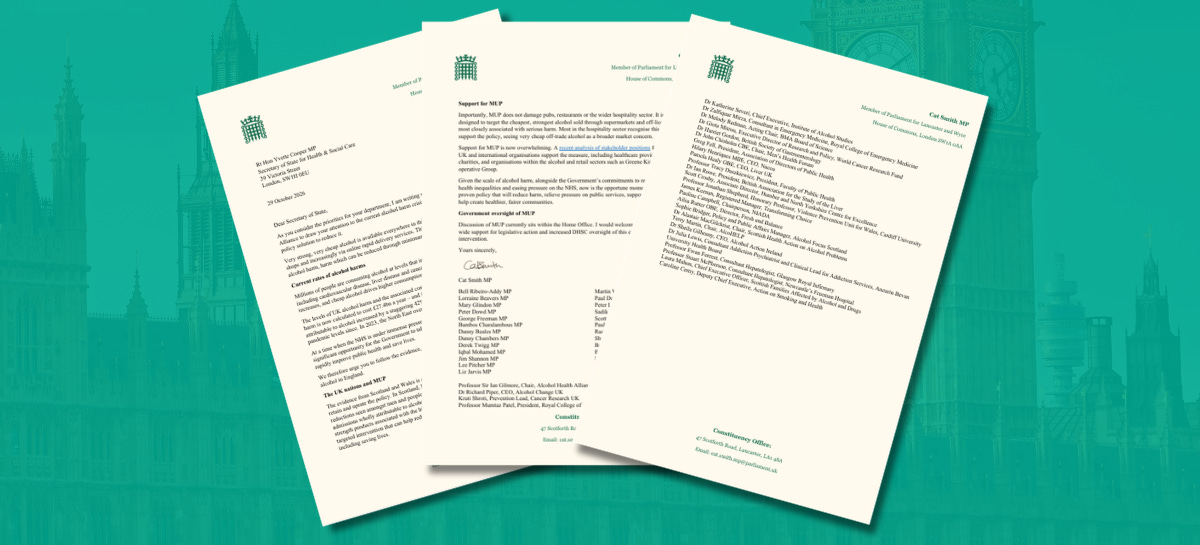
A coalition of 55 parliamentarians, medical organisations, charities, and public health bodies has called on the Government to introduce minimum unit pricing (MUP) for alcohol in England. Led by Cat Smith MP and the Alcohol Health Alliance, the signatories argue that the widespread availability of cheap, high-strength alcohol is driving rising rates of alcohol harm, worsening health inequalities, and placing increasing pressure on the NHS and wider public services.
The intervention comes amid growing support for MUP across the public health, local government and business sectors. An analysis of 325 UK and international organisations found that 89% support the policy, including organisations ranging from healthcare bodies and charities to retailers such as Tesco and the Co-operative Group, and pub operator Greene King.
In a letter to the Secretary of State for Health and Social Care, the coalition points to evidence from Scotland and Wales, where MUP has already been implemented. The letter highlights evaluations finding a 13.4% reduction in alcohol-specific deaths in Scotland, alongside reductions in alcohol-related hospital admissions, while Welsh evidence suggests the policy has removed many of the low-cost, high-strength products associated with the greatest harms.
Cat Smith MP said:
Cheap, high-strength alcohol is not a bargain when the cost is paid in lives lost, families torn apart and growing pressure on our NHS. The human and economic costs are now far too high to ignore. The question for this Government is no longer whether we should act, but why we are still waiting.
Meanwhile, Professor Sir Ian Gilmore, Chair of the Alcohol Health Alliance, warned that “England is in danger of becoming the UK’s alcohol harm outlier.”
Minimum unit pricing sets a legally enforced minimum price per unit of alcohol, preventing the sale of very cheap, high-strength products that are associated with disproportionate levels of alcohol harm. The call received coverage across national and regional media this month, including LBC, BBC North West Tonight, Share Radio, and the PA Media newswire.
Scotland sees inaugural Alcohol Action Day
12 November saw the launch of Scotland’s first-ever Alcohol Action Day, organised by Alcohol Focus Scotland and partners. The 2026 campaign centred on the theme of support, and saw the spotlighting of services, alongside calls for the Scottish Government to carry out a national needs assessment of alcohol treatment services, making sure that support services are fit for purpose, properly resourced, and accessible to everyone.
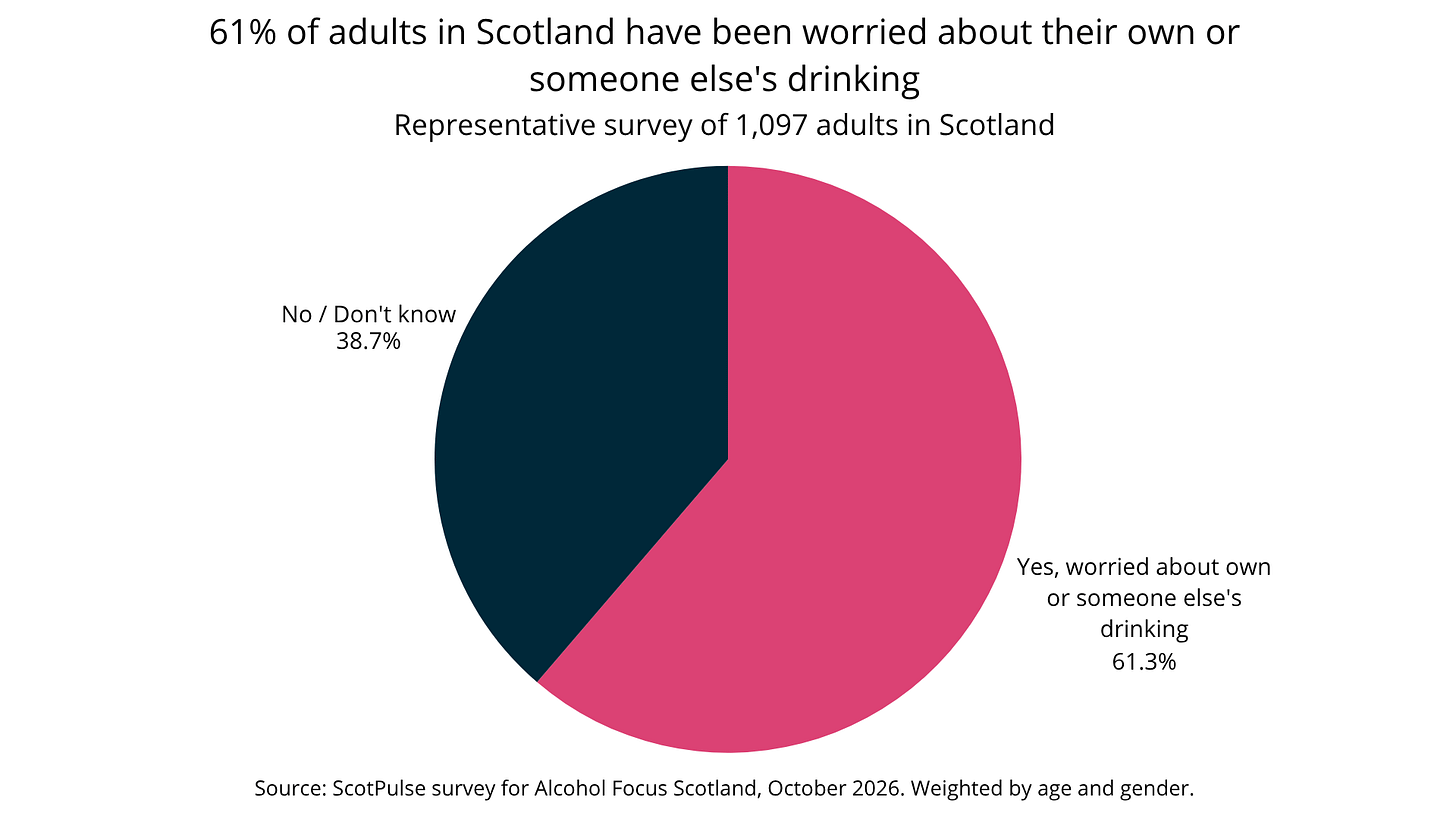
Accompanying the campaign, new polling revealed the scale of public concern around alcohol. Six in ten people in Scotland said they were worried about their own drinking or that of someone close to them.
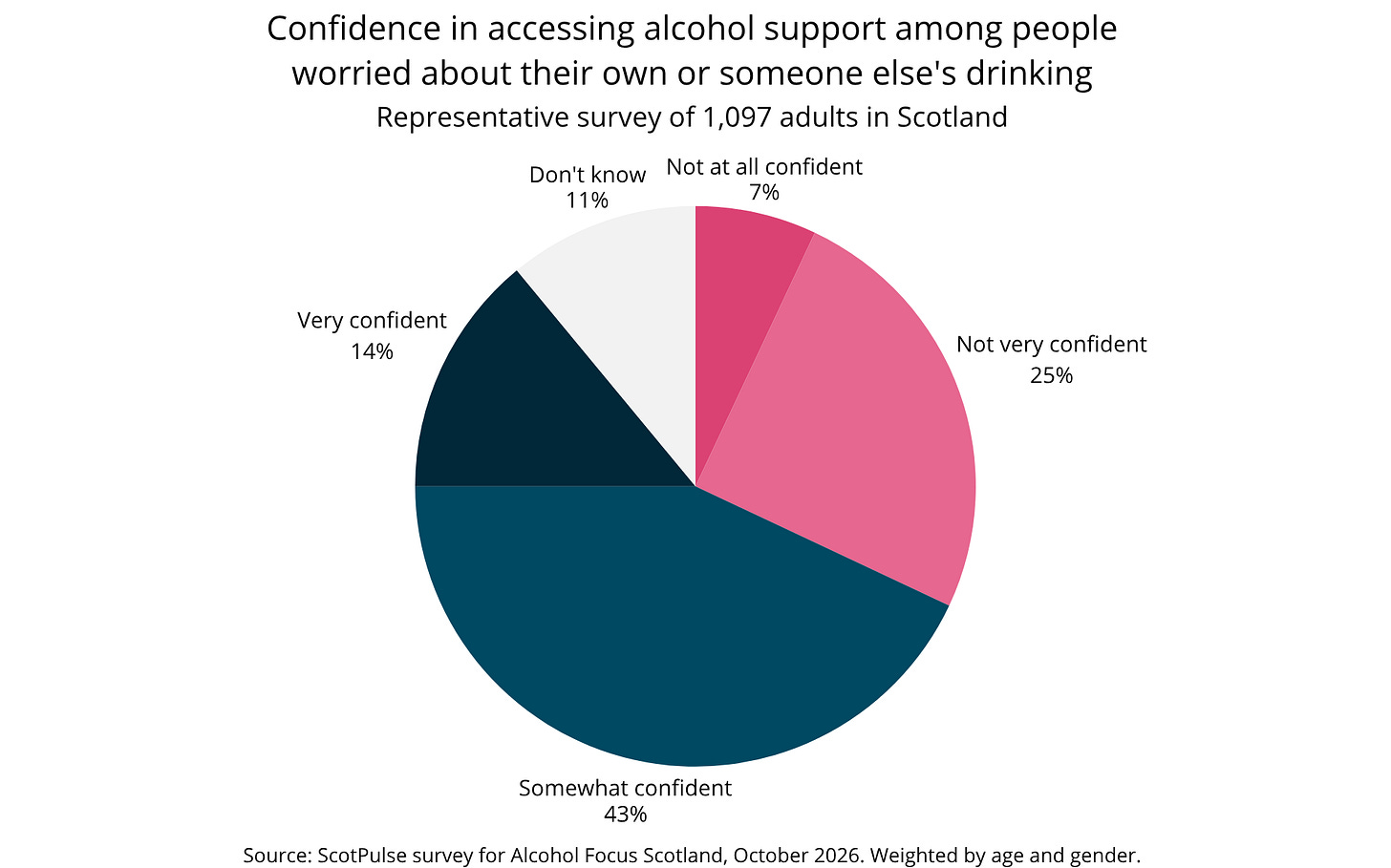
Additional polling found that, of those worried, 37% were not confident they, or someone close to them, could access the right support.
In an Institute of Alcohol Studies blog, Carolyn Lochhead, Chief Executive of Alcohol Focus Scotland, wrote:
At Alcohol Focus Scotland, we know from decades of global research that the power to stop the cycle of misery caused by the ubiquity of alcohol lies in policy change: in controlling the price, availability and advertising of drink. But we can’t leave people unsupported while we campaign for these essential changes.
The right support at the right time can make real and lasting difference to people’s lives. That’s why, this Alcohol Action Day, we’ve launched a petition calling on the Scottish Government to make alcohol support services fit for purpose, properly resourced and accessible to everyone.
Scotland’s Alcohol Action Day saw support from Highland Alcohol and Drugs Partnership (HADP), Inverclyde ADP, Scottish Alcohol Counselling Consortium (SACC), Scottish Families Affected by Alcohol & Drugs – who marked the day by launching an open letter on Fair Funding for specialist alcohol services – as well as more organisations both within and out of Scotland. Alcohol Action Day and the associated polling also saw media coverage in STV News, The Herald, and The National.
IAS presents Autumn Budget analysis
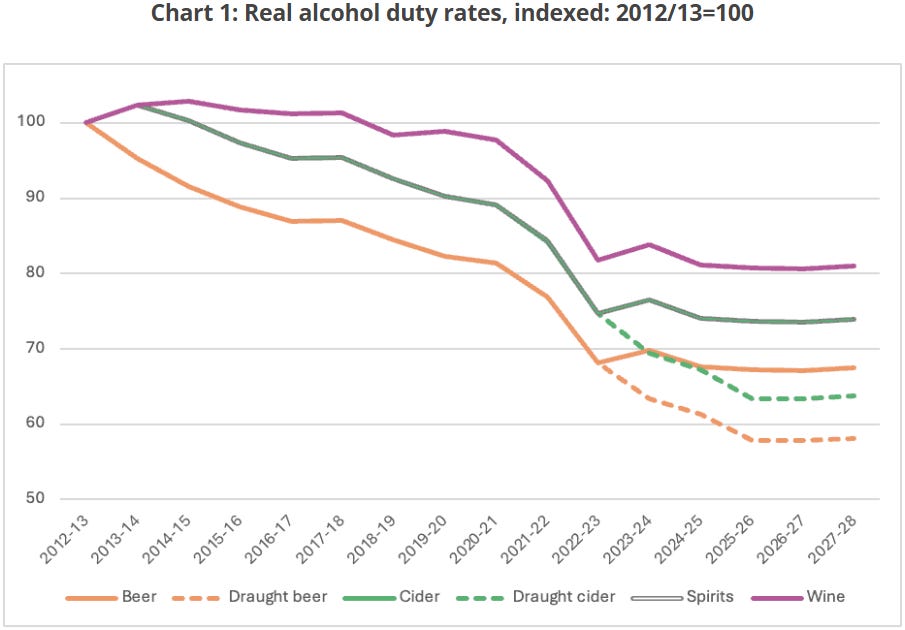
The 2026 Autumn Budget confirmed a 4.55% increase in alcohol duty from February 2027, marking the third consecutive year in which rates have risen in line with inflation. However, new analysis from the Institute of Alcohol Studies shows that alcohol duty remains substantially lower in real terms than a decade ago. Compared with 2012/13 levels, beer duty will still be 33% lower in real terms from February 2027, while duty on spirits and cider will remain 26% lower.
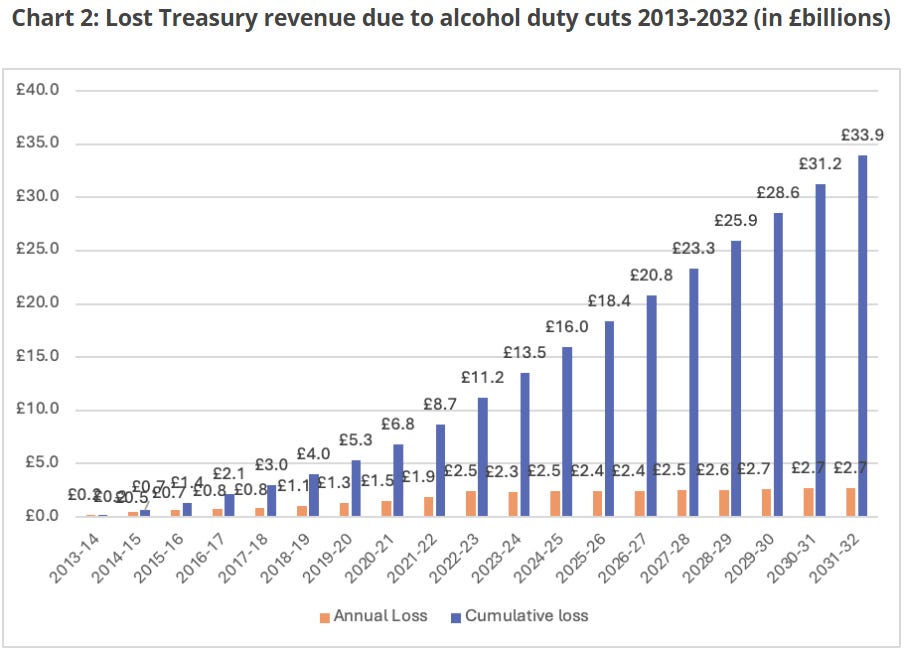
The analysis also estimates that successive duty cuts and freezes since 2013 will have cost the Treasury £33.9 billion by 2032, highlighting the long-term fiscal consequences of keeping alcohol taxes below inflation.
For more, please see the full IAS Autumn Budget Analysis 2026. For detailed recommendations on what future Budgets might do to support public health further, see IAS’s Autumn Budget Submission 2026.
WHO campaign links alcohol policy to preventing violence against women
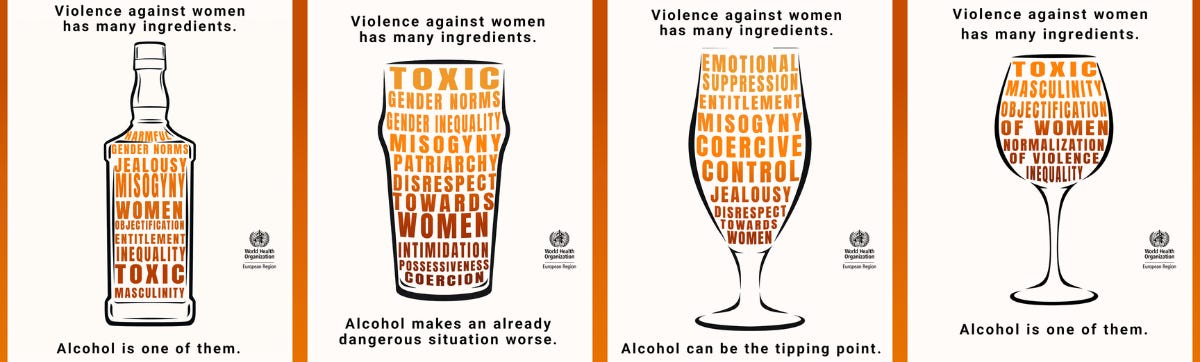
WHO Europe has launched a new campaign as part of the 16 Days of Activism Against Gender-Based Violence, highlighting the role alcohol can play in increasing the risk and severity of violence against women. While stressing that responsibility for abuse always rests with perpetrators, the campaign argues that alcohol policy should be considered part of wider violence prevention efforts.
The campaign points to evidence that alcohol can act as an “accelerant” in already dangerous situations and highlights policies such as restrictions on alcohol availability, late-night sales, and home deliveries as measures that can help create safer environments. WHO Europe cites examples from Lithuania, where stronger alcohol controls were associated with reductions in sexual assaults, and New South Wales, Australia, where earlier closing times for licensed premises were linked to lower rates of domestic violence.
The campaign’s messages echo findings from IAS’s updated briefing on domestic abuse, sexual assault and child abuse, which concludes that alcohol is a significant contributing factor to domestic abuse and sexual violence, despite never being an excuse for perpetration. The briefing notes that 44% of people reporting domestic violence in England and Wales believed the offender was under the influence of alcohol at the time of the assault, while 38.8% of people reporting rape said the perpetrator had been drinking. It also highlights how perpetrators may use alcohol as a tool of coercion and control, including pressuring victims to drink or exploiting intoxication to facilitate abuse, while some survivors use alcohol as a coping mechanism, increasing their vulnerability to further harm.
WHO Europe will be holding a free webinar ‘Alcohol and Violence Against Women‘ on 1 December, 12:00 GMT.
New ADPH position statement on alcohol
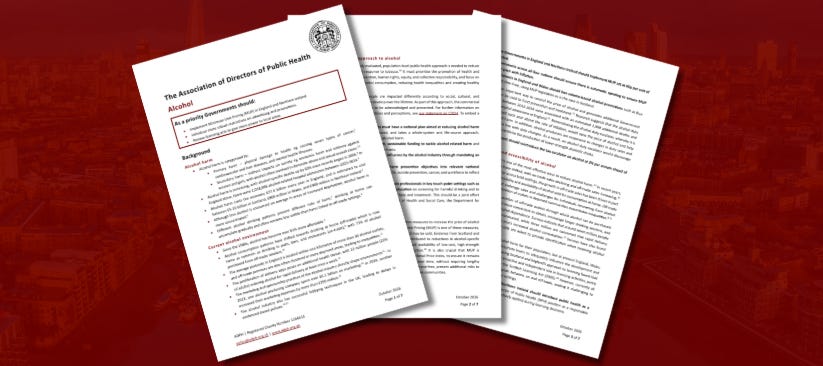
The Association of Directors of Public Health (ADPH) this month published a new alcohol policy statement setting out a series of recommendations to reduce alcohol harm across the UK. Priorities include introducing minimum unit pricing in England and Northern Ireland, restricting alcohol advertising and promotions, strengthening the role of public health in licensing decisions, regulating alcohol delivery services, and introducing mandatory health warnings on alcohol labels.
The statement also calls for governments to protect policymaking from alcohol industry influence and develop comprehensive national alcohol harm reduction strategies.
Headlines revive debate over health benefits of moderate drinking and red wine
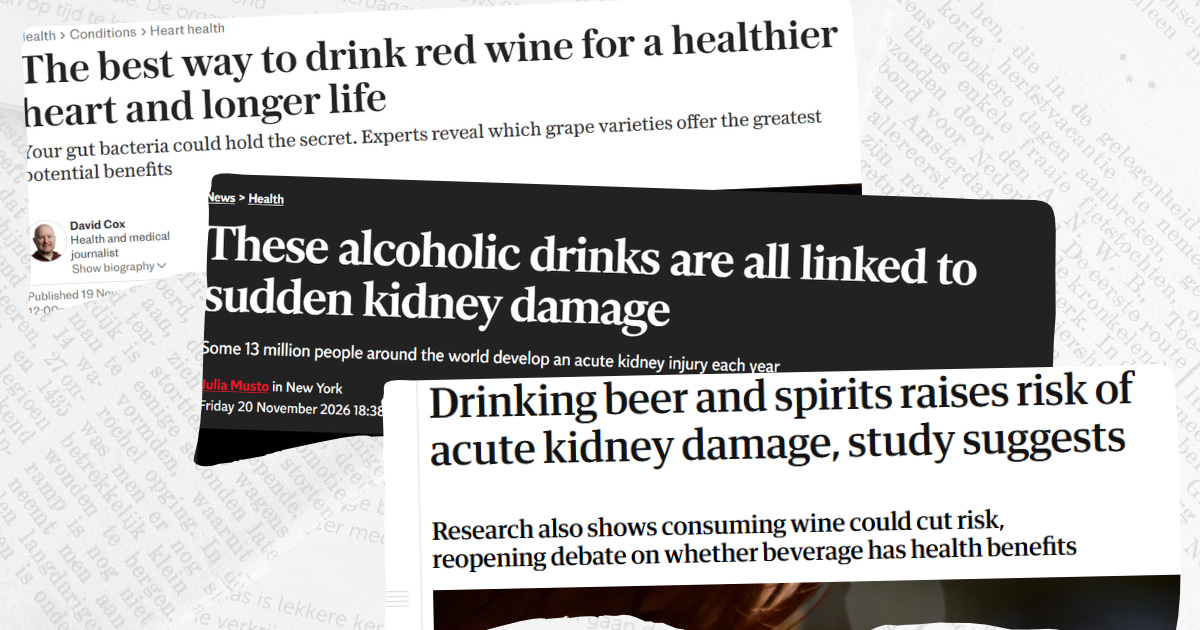
Supposed health benefits of moderate alcohol consumption have come under renewed debate in the media this month, following a fresh round of headlines suggesting that wine may offer some protection against certain health conditions.
The headlines followed two UK Biobank studies on alcohol type and health outcomes. The first, covering 340,924 participants, found moderate wine consumption was associated with a 21% lower risk of cardiovascular death, while beer, cider and spirits were associated with higher risk. The second, covering 250,791 participants, found beer and spirits were associated with an increased risk of acute kidney injury, while wine was not. Both studies were observational and relied on self-reported drinking data, so causation cannot be established.
In press responses, The Independent reported that drinking fewer than 14 servings of wine a week was not associated with increased kidney injury risk, but stressed that “this does not mean wine is protective”. The Guardian carried the same findings, with a subheading of “Research also shows consuming wine could cut risk, reopening debate on whether beverage has health benefits”.
The Telegraph, meanwhile, ran a piece on “the best way to drink red wine for a healthier heart and longer life”, while acknowledging that epidemiologists have largely rejected the “French paradox”. Its own expert, dietitian Sasha Watkins, concluded: “We shouldn’t interpret these associations as evidence that red wine is a healthy choice, but one possible explanation is the polyphenol content of red wine.”
Speaking to the Guardian, IAS Chair Dr Peter Rice urged caution:
Studies which examine the health impacts of different alcoholic beverages are difficult to undertake due to a number of factors. In general, wine consumers tend to have fewer dietary and activity risk factors and are more affluent.
The effect of the alcohol molecule on body tissues does not vary with the type of alcoholic product, therefore any difference in health outcomes is often due to other risk factors, in particular deprivation.
Additionally, the weight of recent evidence also points the other way from the way these findings have been framed in the media. A review of 7,200 scientific articles published in the Journal of Studies on Alcohol and Drugs and this month reported on by ScienceDaily found no overall protective health effect from alcohol, even at low levels. Lead researcher Kevin Shield said: “Even low levels of alcohol use come with health risks. And that risk continues to increase the more someone drinks.” Co-author Katherine Keyes added: “No protective effect of drinking was observed even at low levels.”
Writing for The Conversation this month, Winston Morgan, Professor of Toxicology at the University of East London, translated the findings for UK readers. The researchers estimated that the lifetime risk of alcohol-attributable death:
- Rises above 1 in 1,000 at around seven US standard drinks per week,
- Exceeds 1 in 100 at more than eight and a half drinks (roughly 14.5 UK units),
- Reaches about 1 in 25 (4%) at 14 US drinks, almost 24 UK units.
Morgan additionally explained why the idea of beneficial moderate drinking has proved so persistent, tracing it to the “French paradox” and the J-curve. He argued that the apparent benefit disappears once studies account for former drinkers being grouped with lifelong abstainers, and for differences in income, lifestyle and existing health between moderate drinkers and non-drinkers.
Alcohol Toolkit Study: update
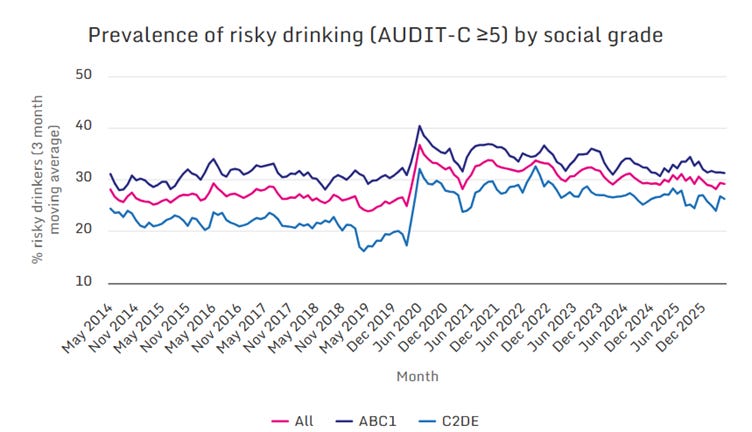
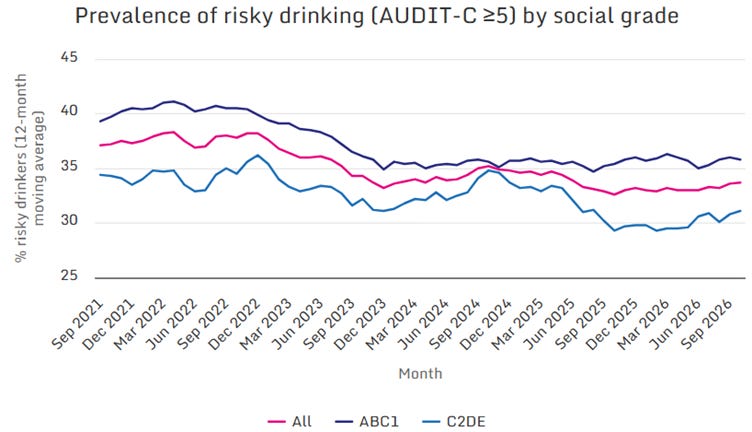
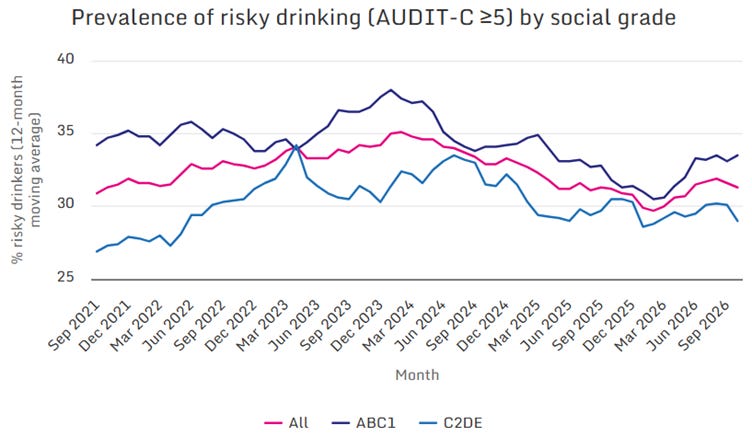
The Alcohol Toolkit Study is a long-running survey of alcohol consumption in England, Scotland, and Wales. The English monthly data has been collected since March 2014, and the Scottish and Welsh data from mid-2021. Each month involves a new representative sample of adults aged 16 and over.
You can find further charts and data for each country here:
The following charts are a snapshot of the prevalence of risky drinking by social grade.
Prevalence of increasing and higher risk drinking (AUDIT-C)
Risky drinking defined as those scoring AUDIT-C ≥5
ABC1: Professional to clerical occupation; C2DE: Manual occupation
England
Scotland
Wales
The UK Alcohol Alert (incorporating Alliance News) is designed and produced by The Institute of Alcohol Studies. Please click the image below to visit our website and find out more about us and what we do, or the ‘Contact us’ button. Thank you.
Podcast
Our monthly podcast features interviews with experts from across the sector.
Is “no safe level” the right message?
Dr Robyn Burton –
University of Stirling
Dr James Nicholls –
University of Stirling
Dr James Morris –
London South Bank University