A new report has revealed how powerful corporations behind tobacco, alcohol, and unhealthy food and drink are continuing to undermine vital public health policies in the UK.
“Killer Tactics 2: Business as Usual” shows how these industries use a shared playbook of manipulation and misinformation to delay, dilute, or derail measures that would save lives. Published by Action on Smoking and Health, the Alcohol Health Alliance, and the Obesity Health Alliance, the report warns that despite a change in government and renewed commitments to prevention, the same old tactics are still being deployed – often behind closed doors.
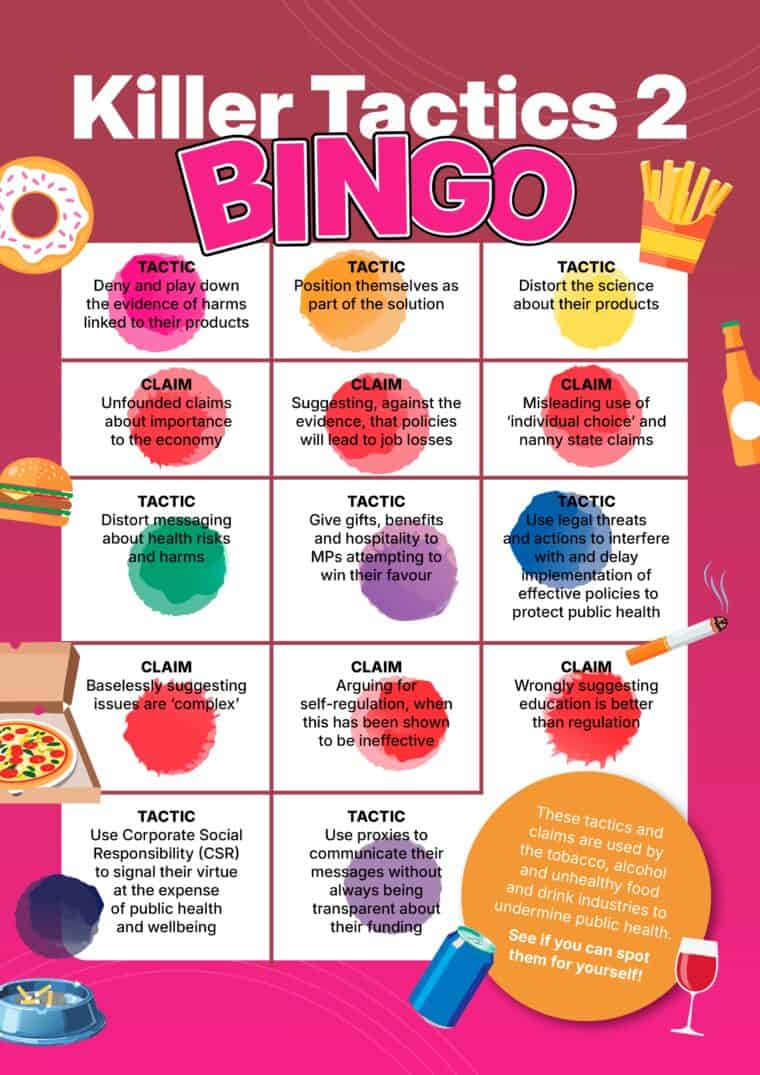
Each year, millions of lives in the UK are cut short or affected by diseases linked to smoking, alcohol, and unhealthy diets. Yet, the report demonstrates how the industries responsible continue to prioritise profits over public health. Their strategies are strikingly similar: positioning themselves as part of the solution, funding front groups to push their messages, distorting science and data, and offering gifts and hospitality to politicians to win influence.
The report highlights several recent examples of industry interference:
- Alcohol: In the run-up to the government’s 10-year health plan, alcohol industry lobbying led to the removal of measures such as Minimum Unit Pricing and restrictions on alcohol advertising. A government taskforce reviewing alcohol licensing was co-chaired by a pub chain executive and excluded health experts entirely.
- Tobacco: While the government has so far resisted pressure to weaken its generational smoking ban, tobacco companies have continued to use proxies and PR campaigns to promote “low-risk” products, distort evidence, and lobby for exclusions that protect their commercial interests.
- Unhealthy food and drink: Promised restrictions on junk food advertising have faced repeated delays following legal threats and aggressive lobbying from food and advertising interests – despite overwhelming evidence and public support for action.
Across these industries, the same unfounded arguments resurface: that regulation will damage the economy, threaten jobs, or limit individual choice. In reality, these claims have been repeatedly disproven by independent evidence.
The report calls for stronger safeguards to protect public health policy from vested interests – including full compliance with the World Health Organization’s rules that keep the tobacco industry out of policymaking, and new guidelines to limit the influence of the alcohol and food industries. It also urges greater transparency around lobbying, gifts, and hospitality in Westminster.
If the UK is serious about improving health and tackling preventable disease, the report concludes, policymakers must stop allowing corporations that profit from harm to shape the rules meant to protect us.
The report also features an updated Killer Tactics Bingo card – highlighting the common arguments and tactics used by health-harming industries.