
View this report
Alcohol harm is a serious and growing concern in the UK, impacting people’s health and wellbeing, the NHS, social services, criminal justice, and our economy. These impacts are felt most by people on low incomes or who live in deprived areas. With the last UK alcohol strategy published in 2012, and alcohol deaths at an all-time high, the time for meaningful, evidence-based policy action is now. The limited commitments to prevent alcohol harm in the 10 Year Health Plan are driving calls for a standalone strategy to get to grips with the alcohol emergency. This document, developed by a broad range of experts in alcohol policy, research, and treatment, offers a blueprint for achieving long-term progress.
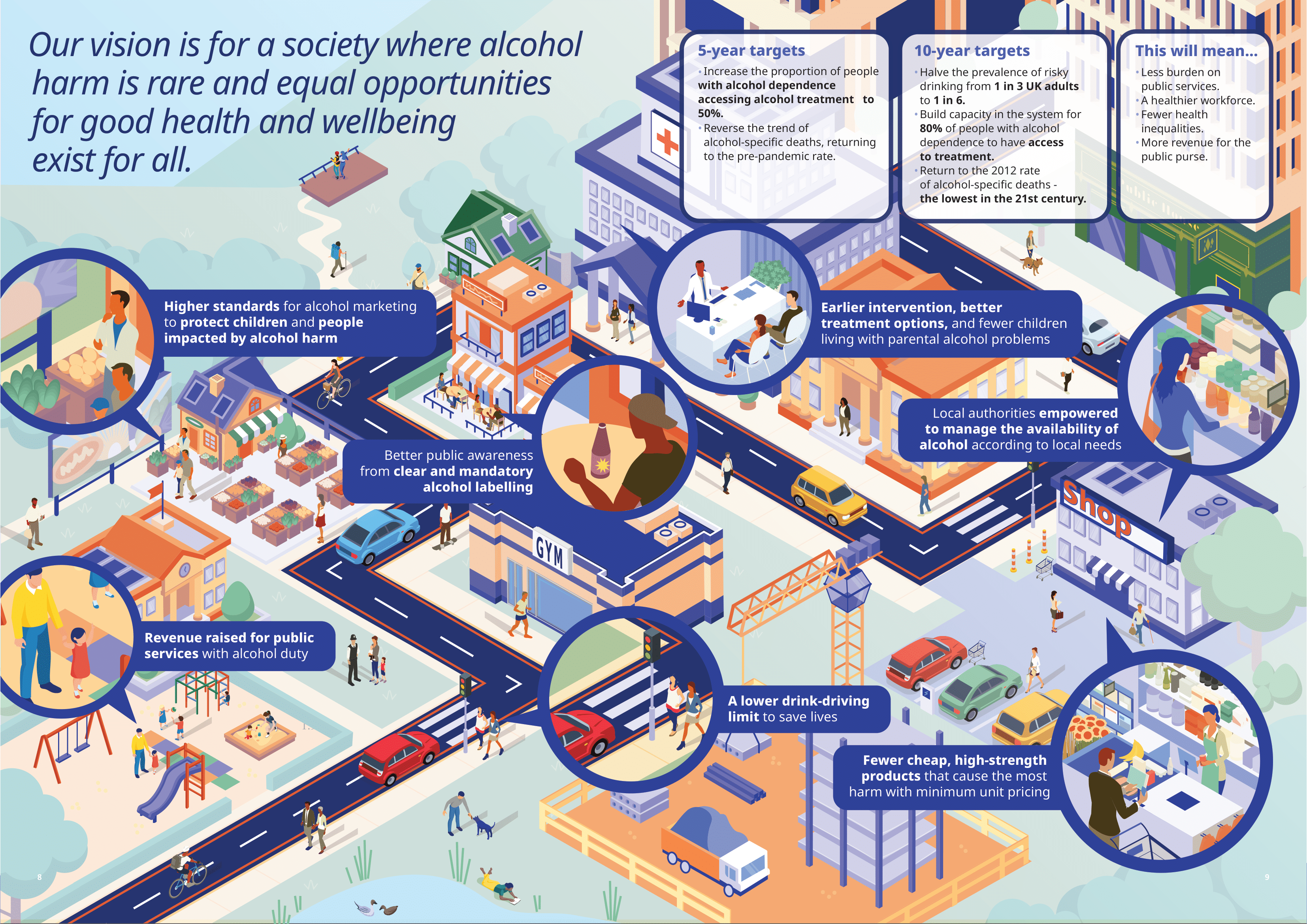
Our vision is for a society where alcohol harm is rare and equal opportunities for good health and wellbeing exist for all.
Key targets for the next decade:
- Halve the prevalence of risky drinking from 1 in 3 UK adults to 1 in 6.
- Increase the proportion of people with alcohol dependence accessing specialist alcohol treatment to 50% within 5 years, and build capacity in the system for 80% of people with alcohol dependence to have access to treatment within 10 years.
- Reverse the trend of alcohol-specific deaths, returning to the pre-pandemic rate within 5 years, and subsequently to 2012 levels within 10 years.
Priority policy recommendations:
- Introduce minimum unit pricing at 65p per unit in England and increase regularly in line with inflation.
- Reinstate the alcohol duty escalator at a minimum of 2% above inflation.
- Introduce restrictions on alcohol marketing, as a minimum equal to those applied for unhealthy food and drink.
- Empower local authorities to regulate hours of sale and online deliveries of alcohol.
- Provide increased and sustained investment in alcohol harm prevention and treatment services.
- Introduce mandatory alcohol product labels that include clear health warnings, ingredients and nutritional information, and the UK low risk drinking guidelines.
- Lower the drink-driving limit across all UK nations.
- Introduce guidelines to manage government interactions with the alcohol industry.
Public support for these measures is high and growing. Progress requires cross-sector action and political leadership to create a healthier, more equitable society.
For full methodology, data and detailed findings, see the accompanying Technical Report.
View this report