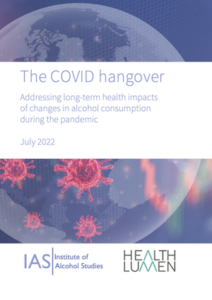
View this report
Drinking patterns in England changed during the COVID-19 pandemic
There has been an increase in the number of higher risk drinkers, and the heaviest drinkers have increased their consumption the most, which brings a risk of more alcohol-related health problems.
Changes in alcohol consumption have continued beyond the national lockdowns of 2020 and 2021. There was a 20% increase in alcohol-specific deaths in England in 2020 compared with 2019, and this trend persisted through 2021. There have also been changes in healthcare access during the pandemic, which could mean other aspects of alcohol harm worsen but become less visible. The long-term indirect effect of the pandemic on alcohol harm is unknown.
Methods: a microsimulation model to project future alcohol harm
This modelling study used the HealthLumen microsimulation model along with a range of survey and healthcare data to predict the impact of changes in alcohol consumption on future alcohol-related harm. Future trends in alcohol consumption are uncertain. To account for this uncertainty, three different scenarios for future alcohol consumption were created. This study projected the impact of changes in alcohol use on rates of nine of the main diseases linked to alcohol (high blood pressure, stroke, liver disease, and six forms of cancer) up to 2035.
Key findings from the microsimulation model
This microsimulation model projects that even if the changes seen to alcohol consumption are short-lived, there are knock-on effects on alcohol harm over the longer term.
Depending on future trends in alcohol consumption, the model projects there will be between 2,860 and 147,892 additional cases of the nine alcohol-related diseases studied in England by 2035.
This is projected to lead to between 2,431 and 9,914 extra premature deaths, and to impact the less well-off in society the most.
The costs to the National Health Service are estimated to be between £363 million and £1.2 billion.
These projections are consistent with recent real-world increases in alcoholic liver disease emergency hospital admissions and alcohol-specific deaths.
Conclusions
Changes in alcohol consumption during the COVID-19 pandemic, even if short-lived, will result in a significantly increased health and economic burden in England. If drinking patterns do not revert to pre-COVID patterns, the disease burden will be far higher.
These increases in alcohol harm and costs to society could be prevented as part of COVID-19 recovery planning. This will prevent avoidable ill-health and premature deaths, reduce the impact on the healthcare system, and save money.
Evidence already exists on the health benefits and cost-effectiveness of various alcohol control policies, which can complement other ongoing policy agendas. They can offer return on investment, are low cost, or can generate revenue, contributing to the health, social and economic recovery from the pandemic.
Recommendations
- A new national alcohol strategy for England is needed, with the following evidence-based policies taking priority: Increase funding and resources for alcohol treatment and support, over and above what is promised in the new Drug Strategy, based upon anticipated need. Alongside this, increase resources for primary and secondary prevention, such as screening and brief interventions.
- Capitalise on the opportunities presented by the new alcohol duty system commencing in 2023. The principle of a strength-based system is welcome, but duty rates should be consistent across different categories and must automatically increase in line with inflation.
- Introduce minimum unit pricing for alcohol. This would align England’s policy with Scotland and Wales. Regarding the minimum price level, others have recommended that Scotland uprates their minimum price to 65p per unit.
- Add protecting and improving public health as a fifth objective of the alcohol licensing system in England, as it is in Scotland. This will enable health more broadly to be part of local decision-making on alcohol availability.
- Improve the regulatory approach to alcohol marketing to reduce exposure and influence among the vulnerable.
View this report