
In this month’s alert
Nine in ten alcohol products carry industry messaging, but just 1% carry a cancer warning
One in five alcohol products sold in the UK fail to meet voluntary labelling guidelines set by the industry’s own self-regulatory body, the Portman Group, finds a new report by the Alcohol Health Alliance and Alcohol Focus Scotland.
The study looked at 530 alcohol product labels, making it the biggest alcohol labelling audit to date. It found that basic nutrition and health information was inconsistent or wholly absent from labels. Key findings include:
- One in four products do not include units per serving, limiting consumer ability to track intake
- Only 6.7% of products currently include any health warning
- Full nutritional information was provided on only 13.4% of products
- Industry-funded messaging (such as ‘drink responsibly’) appears on nearly 90% of products – meaning consumers are ten times more likely to encounter a “Drink Responsibly” message than any genuine health information
- Cancer warnings appeared on just 1.3% of products
The report also found that where health information did appear, it was routinely too small to read, hidden on the back of packaging, and dwarfed by branding. Not a single product carried a health warning on the front.
Professor Sir Ian Gilmore, chair of the Alcohol Health Alliance, said:
Consumers would not accept this level of missing health information on other food and drink products, and alcohol should not be treated differently.
Consumers have a right to know what is in their drink, how much alcohol it contains, and the health risks associated with drinking it. Mandatory alcohol labelling would help ensure everyone can make informed decisions about their health.
The findings arrive at a pivotal moment: the UK government has committed to consulting on mandatory alcohol labelling as part of its 10 Year Health Plan. The report’s authors argue this is an opportunity that cannot be missed.
Carolyn Lochhead, chief executive of Alcohol Focus Scotland, said:
Self-regulation has clearly failed. It’s time for the governments to act and introduce mandatory health warning labels on alcohol products.
The same week, the Portman Group published their own market review of alcohol labelling. They reported that their best practice recommendations are near universally applied across the market, with 99% of products carrying a pregnancy warning logo or message, and 96% carrying alcohol unit content per container information. The Portman Group’s full report is available here.
In related news, a study of 1,636 labels in 13 European countries found that the main warnings on products were on pregnancy (68%), drink-driving (21.4%), age restrictions (16.6%), and ‘responsible drinking’ messages (6.9%). Countries with mandatory legislation had substantially higher proportions of products with health warnings (Lithuania 99%, France 95%) than those relying on voluntary initiatives.
The ‘kidification’ of alcohol: RTDs, nostalgia marketing, and the limits of self-regulation
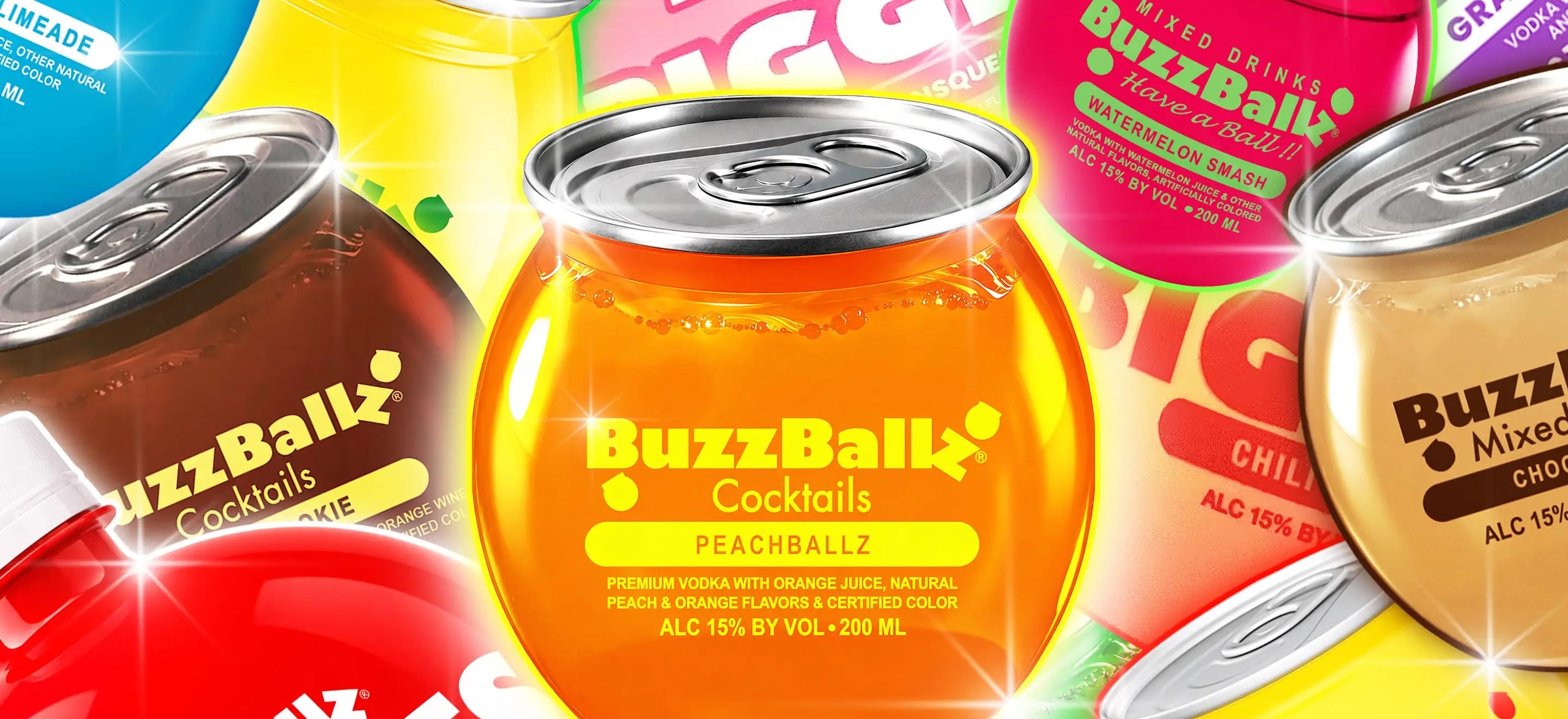
Last month we reported on public health concerns about Sazerac’s 99p shot launch – the latest product from the company behind BuzzBallz. The story hasn’t gone away.
Writing in the Independent, Helen Coffey argued that everything about the 99 launch “screams that it’s designed for children” – yet noted that this generation of child-appealing products is meaningfully different from the alcopops of the early 2000s. Those tended to have lower ABVs; the new 99 bottles sit at 15% – and the Independent reported a separate product with an ABV of 49.5%, framed in similarly playful branding. Sazerac maintains the product is “a clearly adult-only alcohol activation, centred around flavoured spirit shots, nightlife occasions and legal-age consumers,” with its nostalgic creative approach targeting adults who identify with 90s and early-2000s culture.
Meanwhile, health campaigners Fresh and Balance in the North East are raising concerns that go beyond individual products. They warn that a growing trend of packaging alcohol to resemble soft drinks, sweets and novelty goods risks normalising drinking for children – and that some parents may even view such products as a gentler introduction to alcohol. The evidence on early alcohol use points in the opposite direction: links to dependency, anxiety, depression, and poorer educational outcomes are well established. Karen Slater, a mother with lived experience of alcohol dependency, told the Northern Echo that products like these are particularly attractive to teenagers because of their appearance and price – and that the marketing presents alcohol as fun while concealing its real harms.
The RTD category powering all of this continues to grow rapidly. According to the Wine and Spirit Trade Association, UK retail RTD sales hit £704 million last year – up 12% in volume and 17% in value – with nearly half of that growth coming from spending that would previously have gone on bottled spirits. A Guardian feature exploring the “tinification” of British drinking culture noted that RTDs have largely avoided the moral panic that surrounded alcopops, partly because their dominant consumers are perceived as millennials and middle-income women rather than teenagers.
The alcopop parallel is one IAS has been making consistently. As IAS’s Jem Roberts told The Guardian:
We’ve seen this playbook before – alcopops of the early 2000s were all designed with the same logic, and all drew the same public health concerns.
And while overall youth drinking has declined, the UK still has some of the highest rates of heavy episodic drinking among young people in Europe. The continued appearance of child-appealing alcohol products points to the limits of industry self-regulation – and to why statutory controls on alcohol marketing remain an urgent policy priority.
Coroner warns of “unrestricted” delivery apps after 28-year-old man dies
In late June, the Independent reported on a coroner’s ‘prevention of future deaths’ report, which highlighted the dangers of alcohol delivery apps following the death of Joseph Cooper, 28, who repeatedly ordered large quantities of alcohol via delivery services while already intoxicated.
Greater Manchester coroner Chris Morris expressed concern at the “unrestricted availability of alcohol” on such platforms, noting only “basic age-verification checks” were in place.
The case underscores the broader public health risk: Alcohol Change UK research found one in five UK adults use rapid delivery apps to buy alcohol weekly, seven million have ordered while already drunk, and three million are worried about a loved one’s consumption linked to delivery services.
Alcohol Change UK’s End the Delivery Trap campaign is calling for government-mandated safeguards including intoxication checks, order frequency limits, and the ability for individuals and families to block alcohol access on apps.
Alcohol duty reforms lead to big increase in sales of weaker beers
Analysis by the British Beer and Pub Association (BBPA) has found that sales of weaker beers have hugely increased, following the reforms to alcohol duty that mean products under 3.5% ABV pay less than half the tax of products between 3.5-8.4% ABV per unit of alcohol.
The trade body found that sales of beers between 1.3% and 3.4% ABV increased from 35 million pints in 2022 to 912 million pints by the end of 2025 – a rise of around 2,500%.
These beers grew from 0.4% of the market to more than 12% (one in eight pints sold).
As the Telegraph reports, many major brands reduced their ABV to qualify for the lower tax band. This means many consumers who were drinking beers just above 3.4% ABV will have been pulled down into this lower bracket.
The findings come as Treasury officials and ministers review the impact of the alcohol duty reforms before the third anniversary of their introduction.
The BBPA’s Emma McClarkin said the figures showed that:
a progressive alcohol duty regime that incentivises lower-strength products can help grow the economy, give people more options and support public health goals.
However, the Campaign for Real Ale (CAMRA) argued that large multinational brewers are better placed than smaller independent producers to reformulate products and take advantage of the tax incentives, which they worry will lead to the dominance of large brewers at the expense of smaller competitors.
Although the review aims to look back at the impact the changes had, industry figures have said they see this as an opportunity to lobby the government. The WSTA is calling for the return of temporary “easement” rates that were in place until February 2025, which treated all wines between 11% and 14.5% ABV as 12% ABV for duty purposes. Industry representatives say reinstating this measure would provide much-needed support for wine suppliers facing higher tax costs. IAS has previously published a blog about why the easement negates the public health aim of the reforms.
Alcohol linked to pancreatic cancer risk in largest study to date

Alcohol is known to cause at least seven types of cancer: breast, bowel (colorectal), liver, and upper aerodigestive cancers (mouth, upper throat, voice box, and oesophagus). However, growing evidence suggests it may also cause pancreatic cancer.
A new meta-analysis in the International Journal of Alcohol and Drug Research looked at 37 studies examining the relationship between alcohol and pancreatic cancer risk. It found a significantly increased risk for people drinking more than 24 grams of alcohol a day – roughly three units, or a pint and a half of average-strength beer.
The study also found a clear dose-response relationship: the more people drank, the higher their risk, with each additional 10 grams of alcohol per day associated with a 2.4% increase in pancreatic cancer risk.
Previous studies on this topic have produced inconsistent results, which the authors suggest may partly reflect methodological weaknesses in earlier research – particularly the tendency to group people who have given up drinking with lifelong non-drinkers, which can mask the true health harms of alcohol.
In The Lancet, a modelling study across all 27 EU countries published in June estimated that 146,194 cancer cases in 2022 – 16% of cases across seven known alcohol-related cancer sites – were attributable to alcohol.
Researchers modelled four policy scenarios based on real-world evidence: increased excise taxation, a Sunday sales ban, a national marketing ban, and an integrated package combining all three (based on Lithuania’s reforms). All scenarios reduced alcohol-attributable cancer incidence, with the integrated approach performing best, averting an estimated 9,220 cases – a 6.5% reduction in alcohol-attributable cancers.
The independence problem at the heart of Drinkaware’s five-year plan
Drinkaware, the alcohol industry-funded charity, has launched a five-year plan aiming to reduce the number of ‘risky drinkers’ by 2 million by 2030. The organisation says 8 million people currently fall into this category.
Chief executive Karen Tyrell said:
People are drinking less often, average consumption is down… There’s a lot to celebrate here, but our work isn’t done. Of the 8 million risky drinkers, 7 million are drinking above the CMO guidelines but not at the very highest level of harm. This group represents a crucial opportunity for prevention.
The ambition sits uncomfortably alongside reporting from Private Eye, which revealed last year that 25 alcohol companies – including Diageo, Heineken, and AB InBev – wrote to Drinkaware expressing concern about a “disconnect between the organisation’s stated objectives and its current work plan.” The letter demanded that industry donations be mapped onto “signed-off investment plans,” which would effectively give funders a veto over the charity’s work. The companies also called for annual meetings at which Drinkaware would have to account for its activities before the next round of funding was confirmed. Ironically, the letter stated that the companies “want to see [Drinkaware’s] independence protected.”
Tyrell has said that despite its funding model, Drinkaware has no obligation to represent industry interests. But in an interview with The Grocer, she questioned whether advertising restrictions – a WHO ‘Best Buy’ intervention – are necessary given that “a number of the big picture trends are already going in the right direction.” This closely mirrors language used by The Portman Group in lobbying the Department of Health and Social Care against leaked plans to include advertising restrictions in the 10 Year Health Plan, which argued that such measures “would be disproportionate and ill-targeted, given the generally positive trends on alcohol across society.” This is despite the latest alcohol death data finding that although the death rate fell slightly from 2023 to 2024, it remained the fourth highest since records began in 2001.
Tyrell has also called for Drinkaware branding to be included in mandatory labelling requirements in the 10 Year Health Plan. Yet studies have found that Drinkaware materials omit evidence and favour industry narratives – raising serious questions about whether its inclusion on labels would serve public health or industry interests.
No protective effects from low level drinking, study finds
A federally commissioned US study has concluded that even low risk drinking increases the risk of death – findings that sit awkwardly alongside the Trump administration’s decision to water down American drinking guidance earlier this year.
The Alcohol Intake and Health study, published in the Journal of Studies on Alcohol and Drugs, modelled cause-specific lifetime risks across more than 200 alcohol-related conditions using US mortality and survey data. It found a mortality risk from alcohol of 1 in 25 for people who consumed an average of 14 drinks per week – the upper limit of what US guidelines previously recommended for men. Drinking up to seven drinks per week was associated with a 1 in 1,000 risk. The authors recommend revising US guidelines to a maximum of one drink per day for all adults.
Even low levels of alcohol use come with health risks,” said lead author Kevin Shield of the University of Toronto. “And that risk continues to increase the more someone drinks.
Alcohol Toolkit Study: update
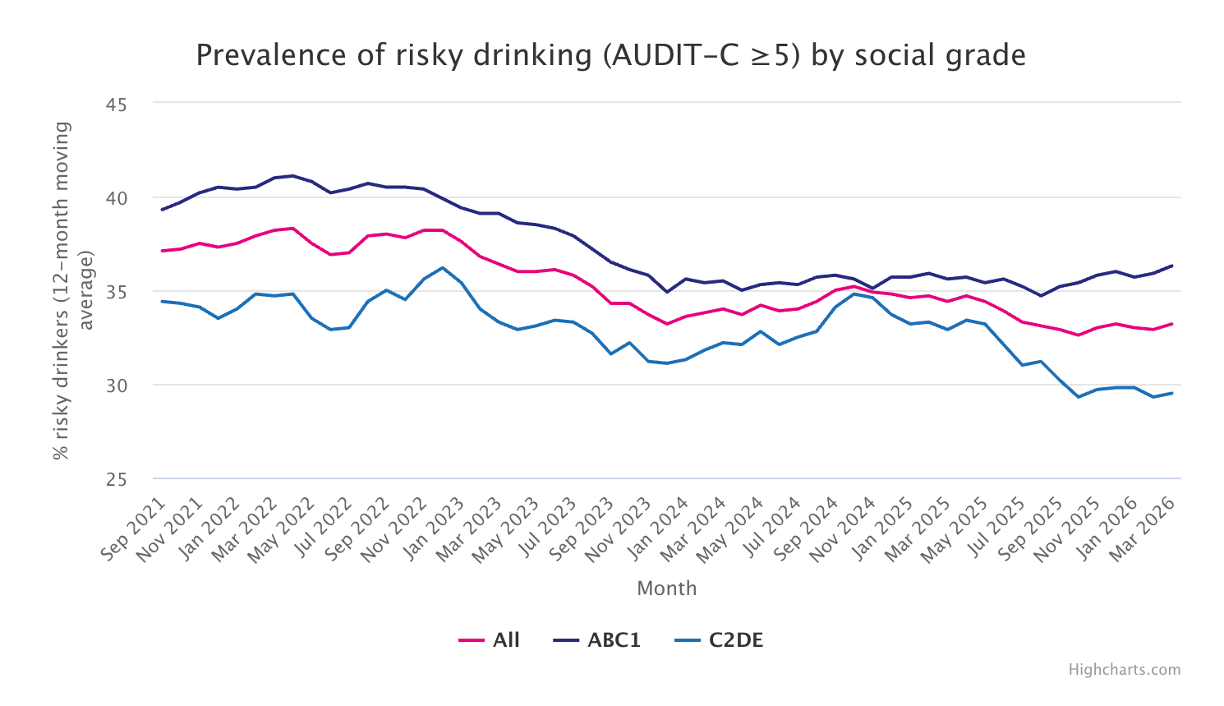
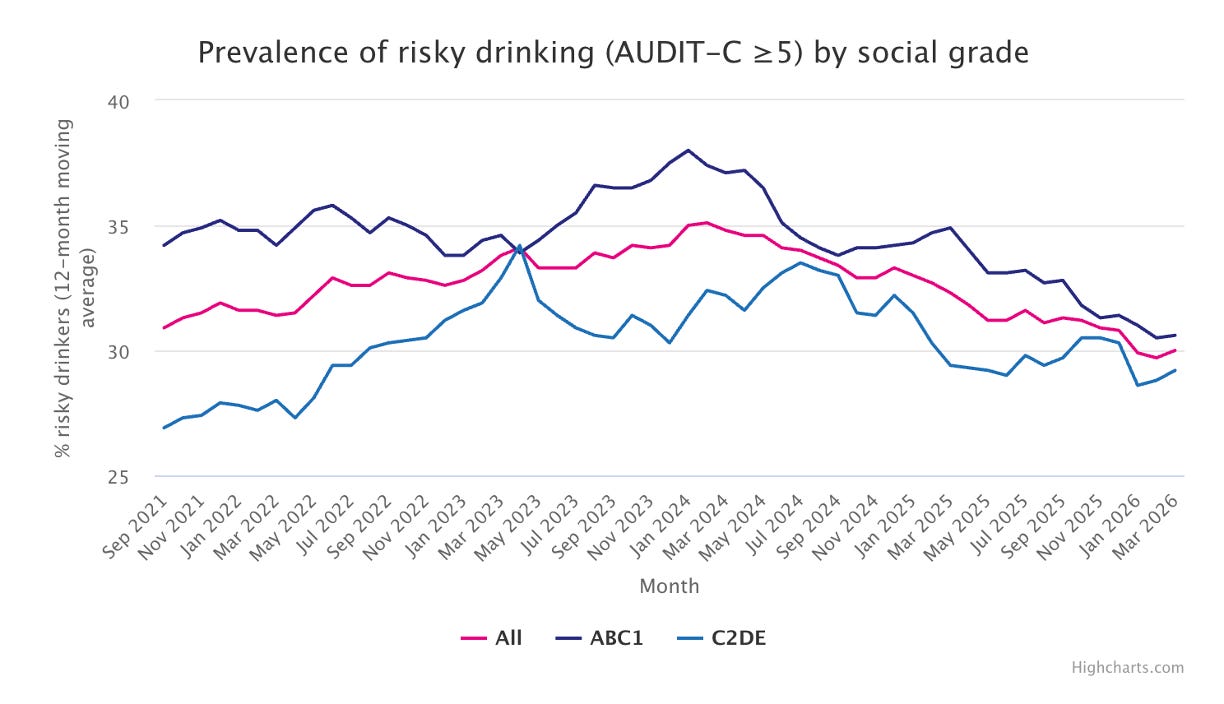
The Alcohol Toolkit Study is a long-running survey of alcohol consumption in England, Scotland, and Wales. The English monthly data has been collected since March 2014, and the Scottish and Welsh data from mid-2021. Each month involves a new representative sample of adults aged 16 and over.
You can find further charts and data for each country here:
· England
· Scotland
· Wales
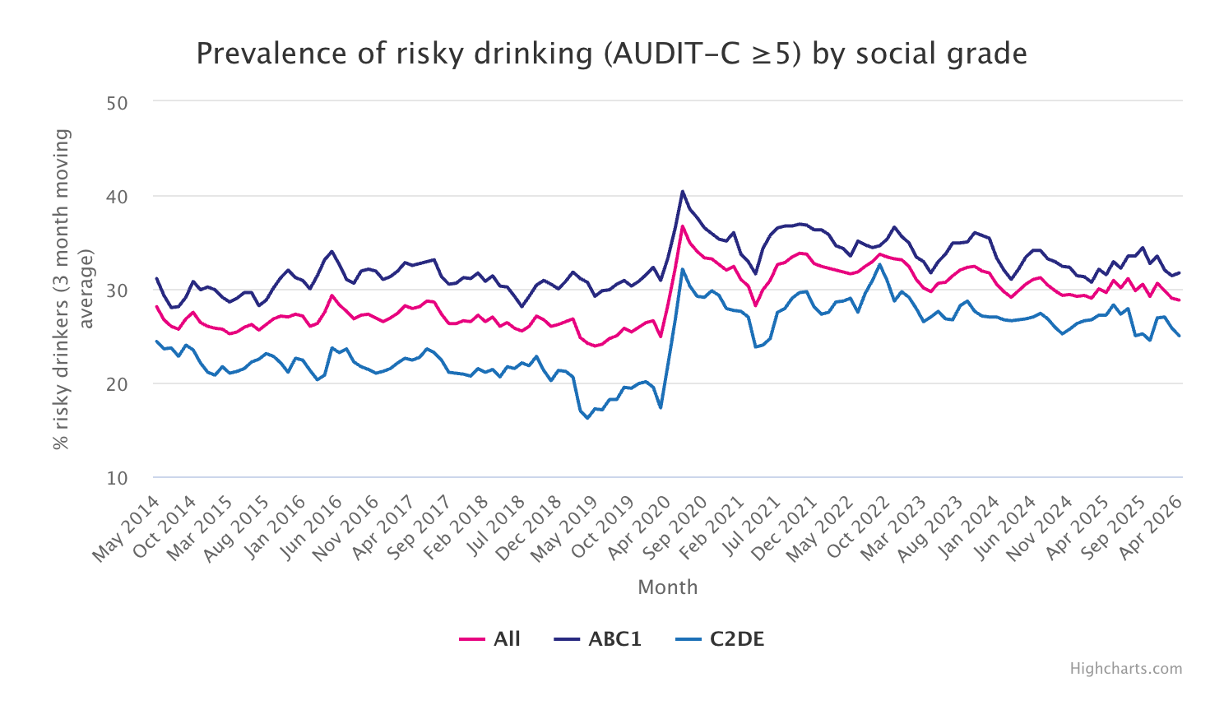
The following charts are a snapshot of the prevalence of risky drinking by social grade.
Prevalence of increasing and higher risk drinking (AUDIT-C)
Risky drinking defined as those scoring AUDIT-C ≥5
ABC1: Professional to clerical occupation; C2DE: Manual occupation
England
Scotland
Wales
Podcast
Our monthly podcast features interviews with experts from across the sector.
The Tobacco and Vapes Act – and how alcohol is being left behind
Ailsa Rutter –
Director of Fresh and Balance