
In this month’s alert
IAS Explained series: Digital Intoxication: Online Alcohol Marketing
In 2026, a US jury ruled that Meta and YouTube knowingly built addictive platforms for kids. Our new film shows what alcohol marketers do with those same platforms: AI targeting that finds heavy drinkers and pushes more, celebrities hiding ads as “authentic” posts, and ads reaching kids in the metaverse.
“Digital Intoxication” features Professors Antonia Lyons, University of Auckland and Nicholas Carah, University of Queensland, alongside testimony from Karen, a Balance North East spokesperson. Watch and share below:
2026 FIFA Men’s World Cup raises questions about licensing relaxations and alcohol sponsorship in sport
The government’s decision to relax licensing laws during the 2026 FIFA Men’s World Cup has reignited debate about the relationship between football, alcohol and public harm.
Pubs in England and Wales were permitted to remain open until 1am for evening fixtures and 2am for later kick-offs, with a last-minute extension to 5am approved for England’s round-of-16 match against Mexico. Police leaders criticised the move, arguing that extended drinking hours place additional pressure on frontline services and are associated with increased alcohol-related harm.
Emerging evidence continues to support those concerns. New research by Nurnabi Sheikh and colleagues found that extending licensing hours in Aberdeen, where 38 venues were allowed to serve alcohol until 3am, was associated with an 11.4% increase in alcohol-related ambulance call-outs during weekend nights and an 8.5% rise in reported crime. The study also found that alcohol-related harms occurred later into the night, with the peak period for ambulance call-outs shifting from midnight–1am to 1am–2am. The largest increases were observed among men and adults under 45.
Notably, a more limited licensing extension in Glasgow, affecting only 10 nightclubs and operating under stricter conditions, was not associated with a measurable increase in harm. The findings suggest that the scale and conditions of licensing changes may influence their public health impact.
The tournament also coincided with a rise in football-related incidents. England and Wales recorded 384 football-related domestic abuse incidents and 2,322 football-related incidents overall during the competition, exceeding figures seen at previous World Cups and European Championships. Women’s Aid and policing leaders highlighted how excessive alcohol consumption and heightened emotions surrounding major sporting events can exacerbate existing abusive behaviour. National Police Chiefs’ Council (NPCC) football policing lead Mark Roberts described alcohol as the “principal driver” of the increase in incidents and warned that greater alcohol availability risks creating “more harm in the home.”
In a July BMJ opinion article, Professor Sir Ian Gilmore of the Alcohol Health Alliance and Dr William Gilmore of Curtin University argued that football’s close relationship with the alcohol industry continues to normalise harmful drinking. Similar concerns about football’s relationship with alcohol have been raised by Dr Richard Purves. In research by Purves and colleagues, 11-17-year-old participants showed a sophisticated understanding of alcohol sponsorship:
If you’ve got it shown to you from a young age, you’re going to know about it more, so it’s going to be more hardwired into your brain.
This included many seeing a clear contradiction between sport’s healthy image and alcohol sponsorship:
It’s a bit ironic for sports, which is obviously linked with health, to be partnered with alcohol.
The Royal College of Psychiatrists also used the tournament to highlight alcohol’s impact on mental health, warning that excessive drinking can worsen anxiety, depression and sleep problems while increasing the risk of violence and other harms. Professor Owen Bowden-Jones encouraged anyone concerned about their drinking to seek support, stressing that:
The earlier people seek help, the better the outcomes are likely to be.
Alongside licensing changes, the government pointed to enforcement measures designed to reduce alcohol-related offending. Around 7,300 offenders were subject to continuous alcohol monitoring requirements during the tournament, with government figures indicating participants have remained alcohol-free for 97% of monitored days since the scheme was introduced.
The World Cup period also prompted renewed discussion about alcohol policies within football itself. Then-Greater Manchester Mayor and now-Prime Minister Andy Burnham questioned the longstanding ban on drinking in football stands, while then-Prime Minister Keir Starmer rejected calls for reform on public safety grounds. In Scotland, meanwhile, Aberdeen FC recently secured a permanent licence to sell alcohol in a designated stadium concourse following successful trial periods.
Burnham premiership sees competing visions for growth
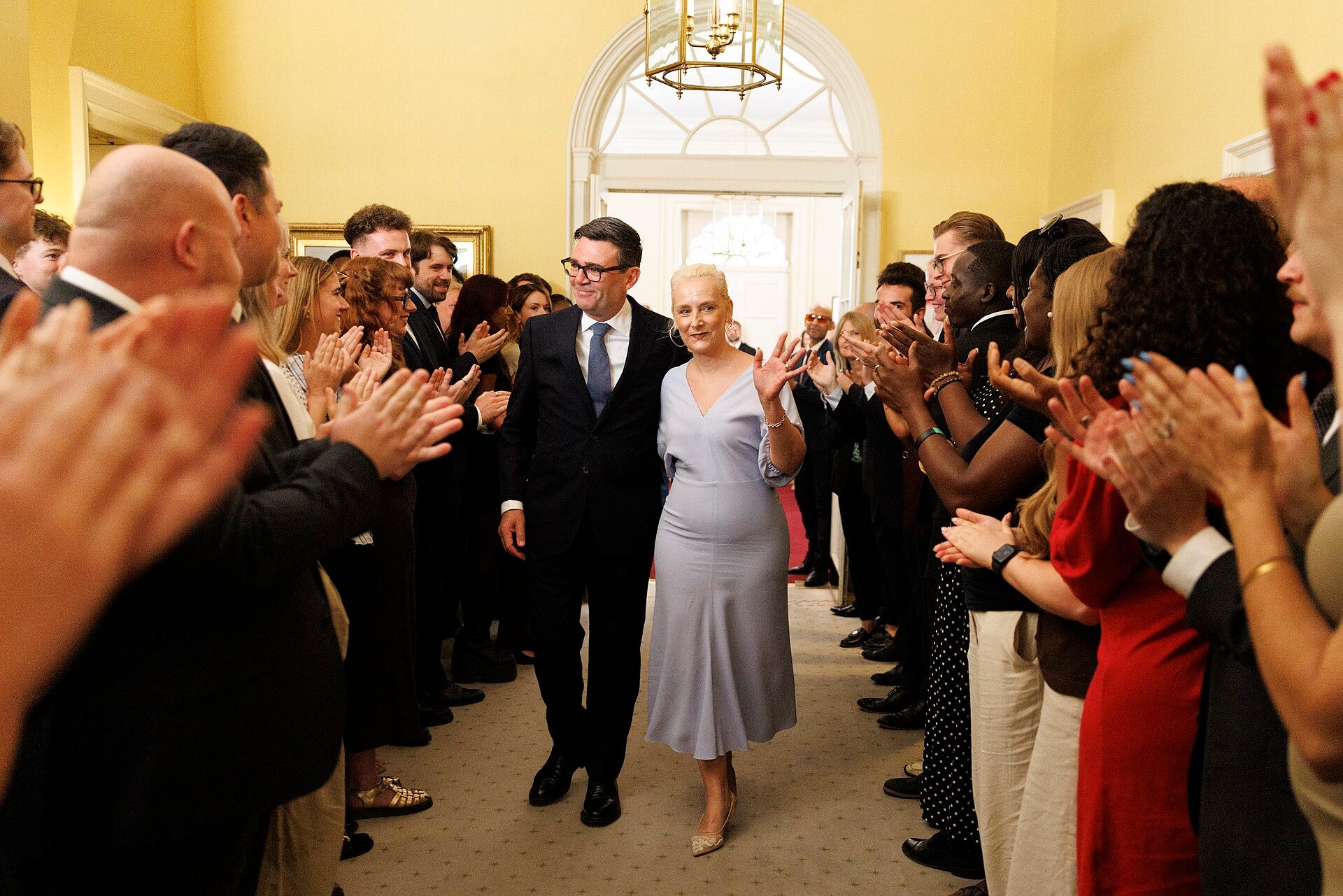
In their BMJ op-ed, Professor Martin McKee and Dr Lucinda Hiam highlight Andy Burnham’s concept of “good growth”, arguing that economic growth and improved public health should be pursued together rather than treated as separate goals. Drawing on Greater Manchester’s experience, the authors highlight investment in housing, transport and employment support as examples of policies that can improve both economic and social outcomes, while arguing that wider devolution of powers will be needed to replicate this approach nationally. Their call for devolution comes as provisional figures show that the north-south divide in life expectancy in England has grown over the past decade, partly due to people in northern regions experiencing more illness from cancers, heart disease, and suicides and deaths relating to alcohol and other drugs.
Meanwhile, industry voices have urged Burnham to put hospitality “back at the heart of UK’s growth agenda,” with Steve Perez – founder and chief executive of drinks producer Global Brands – calling for a reduction of VAT rates for the sector from 20% to 10-13%.
Additionally, the Telegraph’s “Save Our Pubs” campaign has expressed concern over alcohol harm-reduction measures, particularly the World Health Organisation’s recommendation of raising alcohol duty by at least 50% – labelling it a “sin tax.” They highlighted alcohol harm-reduction measures previously included in Greater Manchester’s alcohol harms strategy under Burnham, such as minimum unit pricing and higher alcohol duties. The British Beer and Pub Association (BBPA) warned that policies of this nature could add to pressures on the sector, and that “sledgehammer tactics” should not be used to tackle harmful drinking:
This is especially true for a policy like minimum unit pricing, which evidence shows has had little effect on drinking patterns where it has been applied before.
This is an inaccurate account of the pricing policy, which was found to have reduced alcohol sales and consumption in Scotland, and saved 156 lives a year since it was implemented. The policy would also support the pub trade by narrowing the gap in price between off- and on-trade alcohol.
In related news, since Burnham’s July 20 appointment as Prime Minister, the government has announced a 20% cut in business rates for pubs, clubs and live music venues in England from April. Around 32,000 venues are expected to benefit, with the average pub saving roughly £1,100 a year.
The hospitality sector has broadly welcomed the £100m package, with the Campaign for Real Ale (CAMRA) chair Ash Corbett-Collins calling the move “a brilliant start to the new Prime Minister’s tenure.” Yet operators say the relief will only partially offset wider cost pressures, arguing that VAT, labour and operating costs remain far bigger challenges.
Meanwhile, café owners have criticised the decision to exclude independent cafés, saying they provide the same community value as many venues covered by the scheme. Hakan Elbir, founder of the deaf-run Dialogue Cafe, said:
If Burnham wants to help communities, he needs to look at what communities really want, rather than what he thinks they want, and focus his support there.
Public health bodies welcome lobbying reform proposal
A government-commissioned review by ethics commissioner Doug Chalmers has recommended sweeping reforms to UK lobbying rules, arguing that all lobbying activity should be publicly declared rather than the small proportion currently captured. Proposals include mandatory disclosure of informal lobbying contacts, broader coverage of officials and advisers, tougher penalties for non-compliance, and a new AI-powered public register. The review aims to increase transparency and rebuild trust in government decision-making.
In a letter to The Guardian, Caroline Cerny (Action on Smoking and Health), Prof Sir Ian Gilmore (Alcohol Health Alliance) and Katherine Jenner (Obesity Health Alliance) welcomed proposals to strengthen lobbying transparency. They wrote that:
Greater openness is an important safeguard against undue influence, and a vital first step towards ensuring public policy is developed in the public interest.
Decisions affecting the nation’s health should be informed by the best available evidence and made transparently. The public has a right to know who is seeking to influence those decisions and how that influence is being exercised. Transparency is essential to building trust and protecting the integrity of policymaking.
Dr Beccy Cooper MP joins calls for MUP
Labour MP Dr Beccy Cooper has put forward her case for minimum unit pricing (MUP) in England. She says the evidence from Scotland and Wales shows it has helped narrow health inequalities, saving most lives in the most deprived communities:
The UK already knows what works. Continued inaction on MUP in England is becoming increasingly difficult to justify.
It comes as Paul Johnson, Chief Executive at Public Health Scotland and writing for the King’s Fund, highlighted MUP as an example of a bold public health policy that has delivered measurable benefits.
Dr Beccy Cooper MP has since been appointed Parliamentary Private Secretary at the Cabinet Office, as part of Andy Burnham’s post-appointment Cabinet reshuffle.
BuzzBallz sees record growth but faces ‘greenwashing’ scrutiny
Ready-to-drink (RTD) cocktail brand BuzzBallz has emerged as one of the fastest-growing alcohol brands in the UK, according to The Grocer’s Britain’s Biggest Alcohol Brands 2026 report. The ready-to-drink (RTD) cocktail brand recorded the largest absolute value gain of any alcohol brand, adding £73 million in sales in the past year and volume sales up 952%.
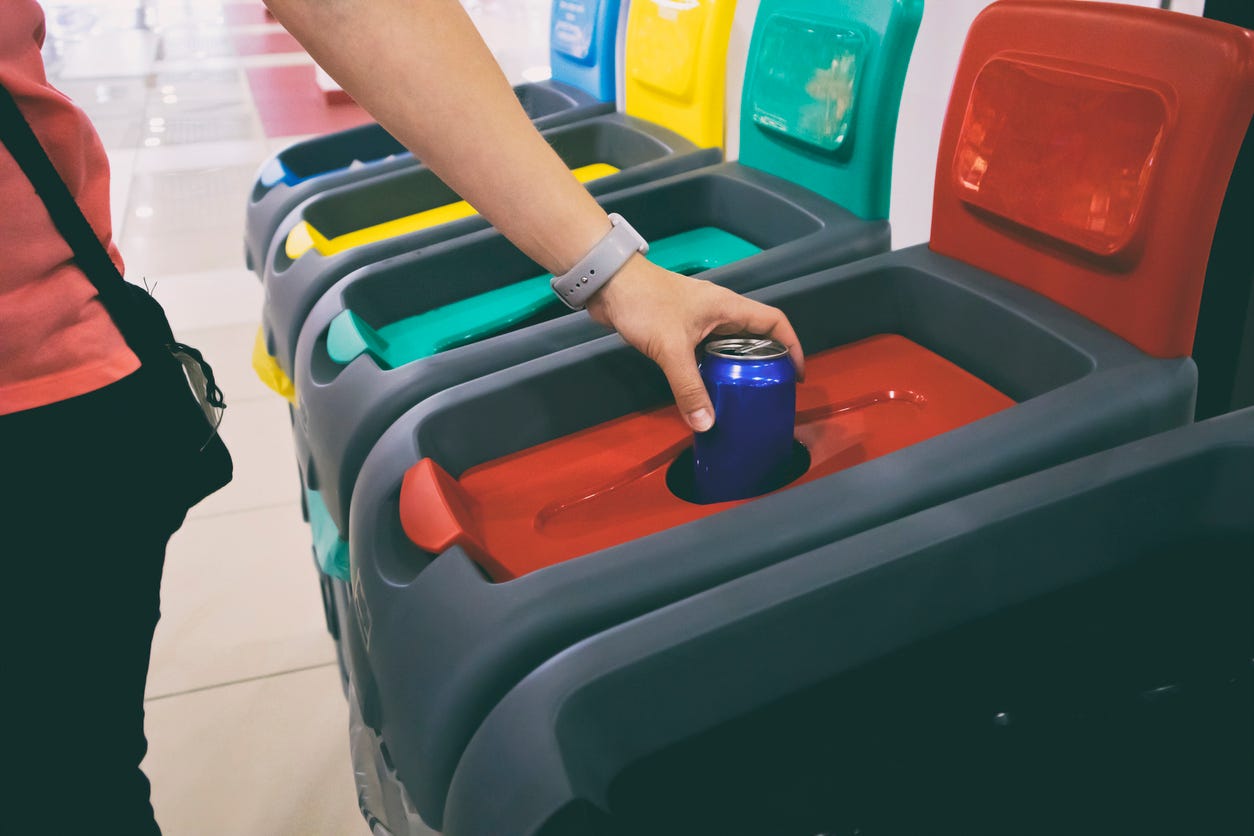
However, the brand’s success has been accompanied by growing criticism over its packaging. A BBC News investigation found that the drink’s distinctive plastic-and-aluminium containers, previously marketed as recyclable, cannot currently be processed by UK recycling facilities.
Environmental scientist and campaigner Laura Anderson described the company’s messaging as “misleading” and “greenwashing”:
“If a company cared about sustainability, they could make these products in a fully aluminium can and still have the colours, the branding and the quirky design.”
BuzzBallz, owned by US drinks firm Sazerac since 2024, blamed a “website error” for its recyclability claims and has since deleted the relevant FAQ pages without further comment. Public health commentators, including IAS and Alcohol Change UK, have separately accused Sazerac’s products – such as ‘99’ and Buzzballz – of ‘kiddification’ and appealing to children through their packaging.
Alcohol Toolkit Study: update
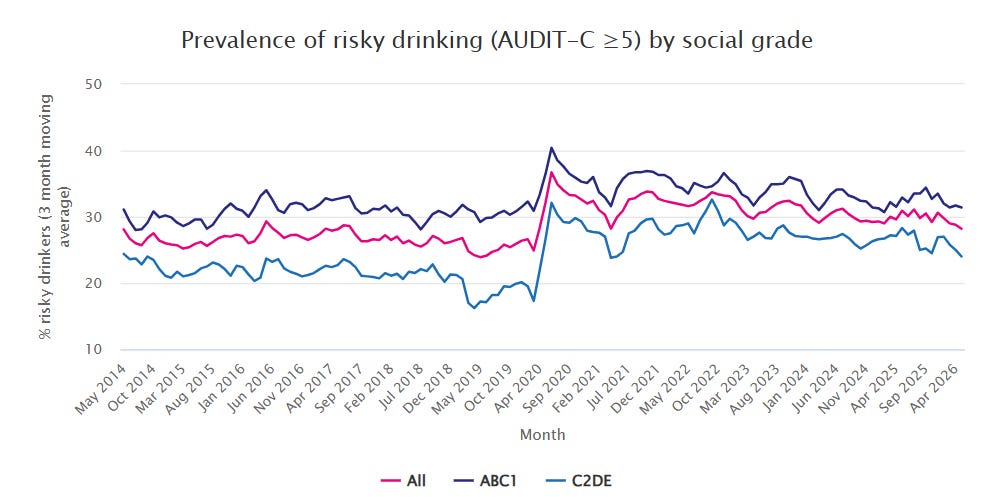
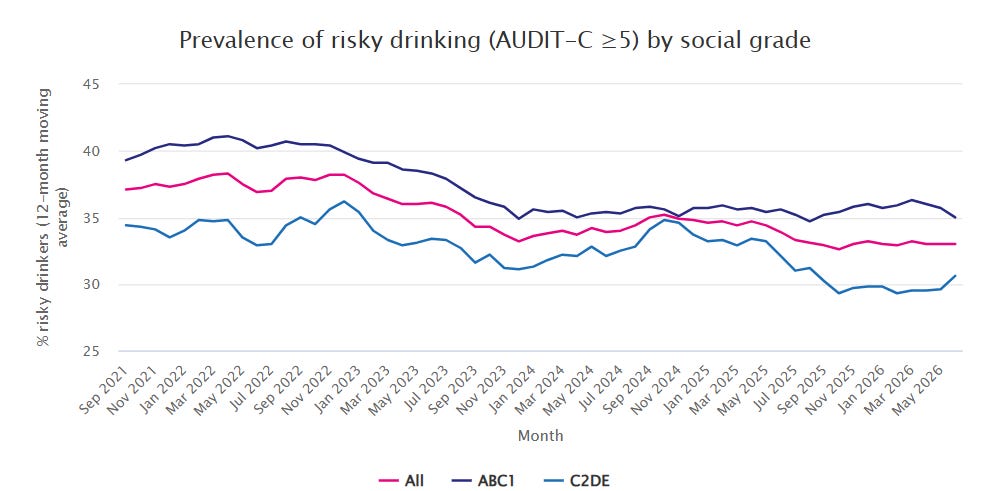
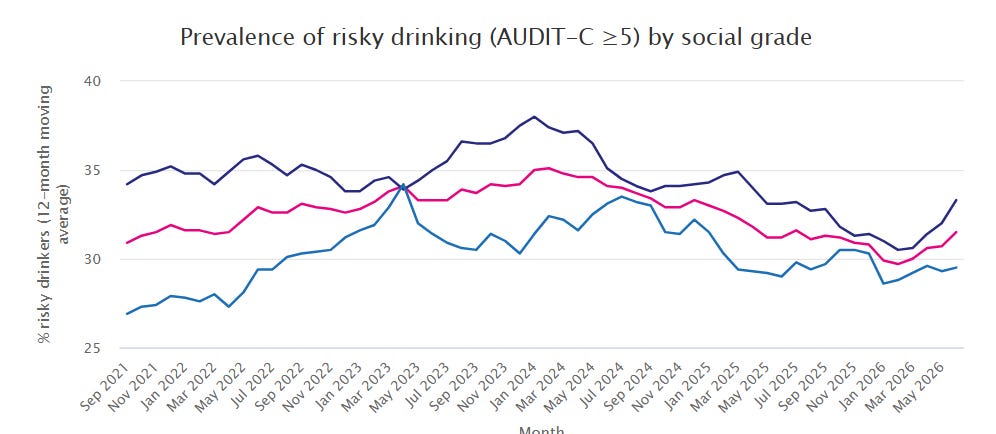
The Alcohol Toolkit Study is a long-running survey of alcohol consumption in England, Scotland, and Wales. The English monthly data has been collected since March 2014, and the Scottish and Welsh data from mid-2021. Each month involves a new representative sample of adults aged 16 and over.
You can find further charts and data for each country here:
The following charts are a snapshot of the prevalence of risky drinking by social grade.
Prevalence of increasing and higher risk drinking (AUDIT-C)
Risky drinking defined as those scoring AUDIT-C ≥5
ABC1: Professional to clerical occupation; C2DE: Manual occupation
England
Scotland
Wales
Podcast
Our monthly podcast features interviews with experts from across the sector.
The Tobacco and Vapes Act – and how alcohol is being left behind
Ailsa Rutter –
Director of Fresh and Balance