On this page
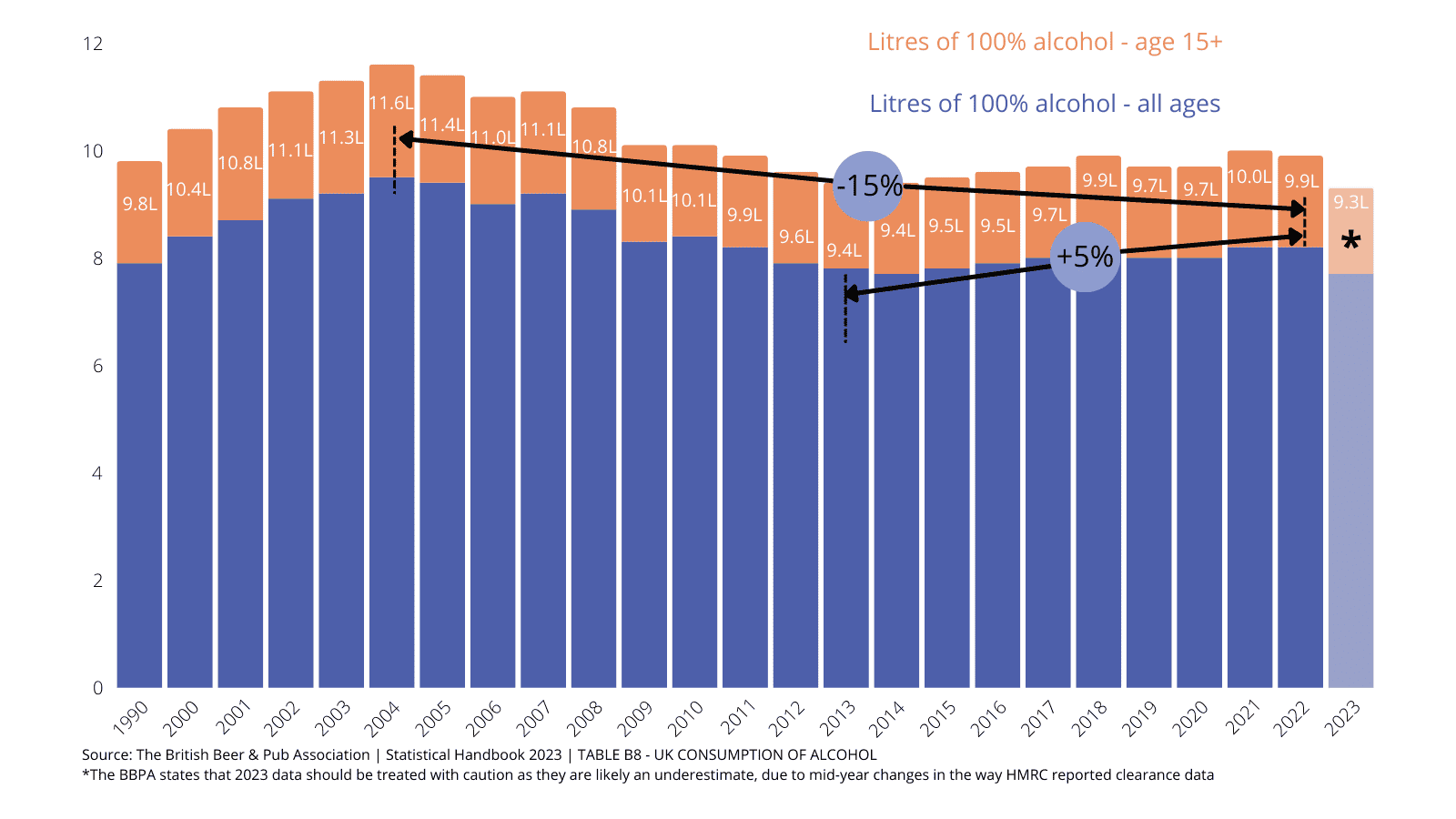
Alcohol consumption in the United Kingdom rose per head of the adult population during the post-war years, more than doubling between the mid-1950s and late 1990s. It has fallen slightly from a peak of 11.6 litres in 2004; periods of slow economic activity in recent years may have contributed to this relative decline (click on the link to download a spreadsheet of consumption trends since 1980 [UK total consumption of alcohol since 1980]). Men consume on average more than twice as much alcohol – mainly beer – on a weekly basis as women, although in terms of amounts drunk, women now purchase more units of wine than men in total. According to research company Nielsen, roughly seven in every ten wine bottles sold in Britain’s supermarkets are bought by women.
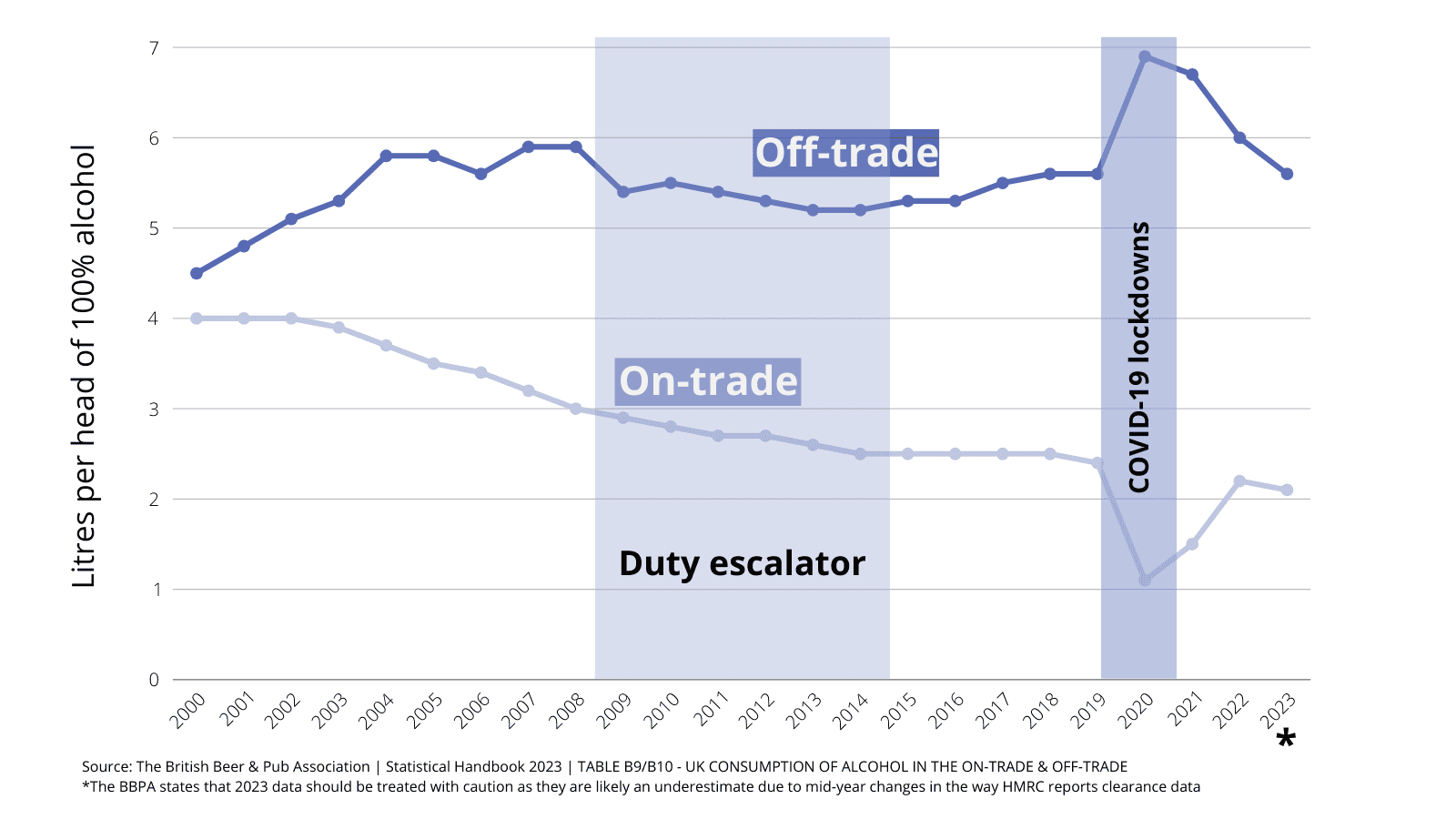
This fact is also representative of a long-term increase in the proportion of alcohol purchased from off-licenced outlets and consumed at home rather than in pubs and bars; British Beer & Pub Association (BBPA) figures estimate that three times as much alcohol is now bought from off-licenced premises as from pubs and other on-licenced premises. This is thought to be due to the increased affordability of alcoholic beverages from off-licence vendors, relative to the cost of purchasing drinks in pubs and bars.
Facts and stats
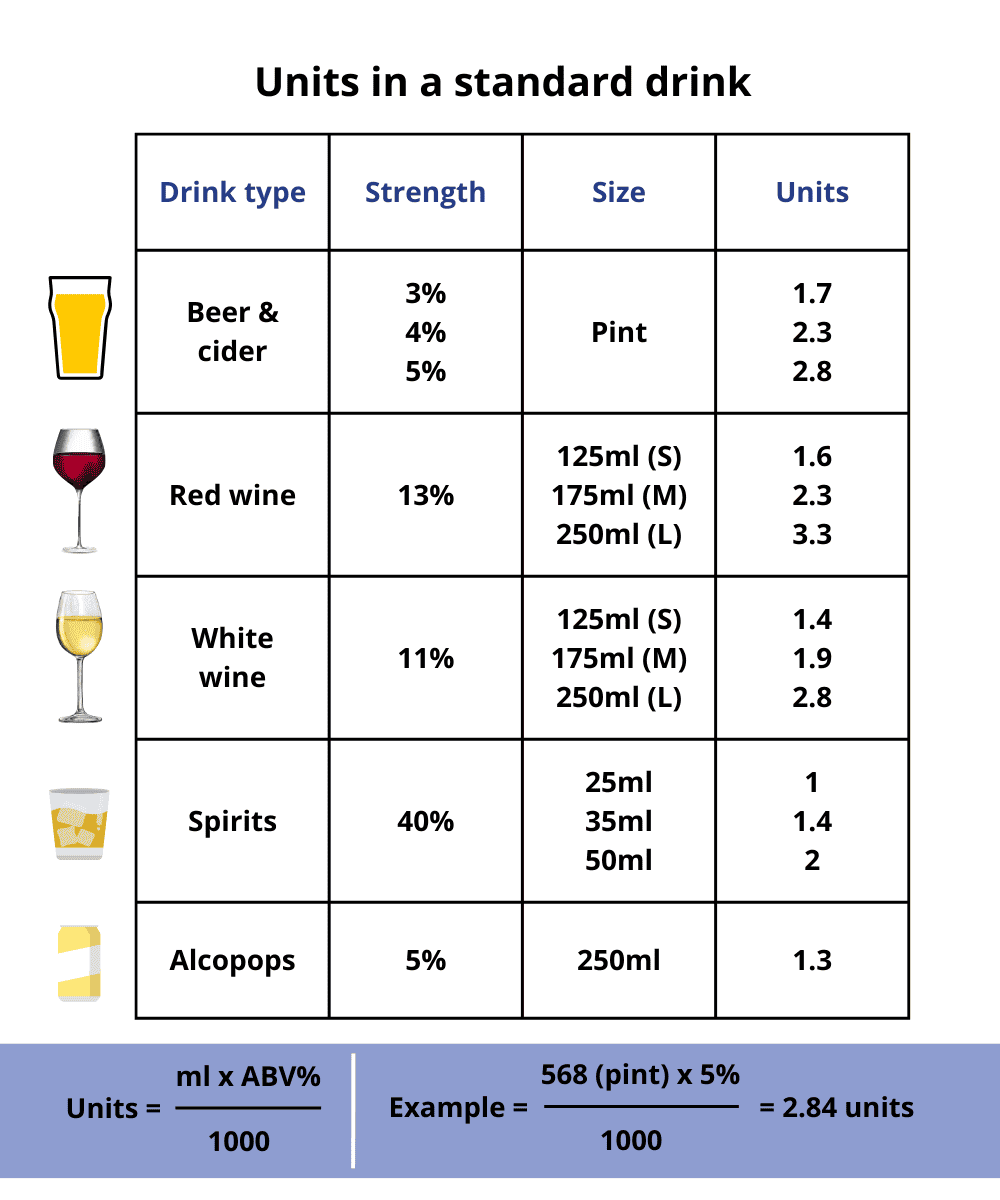
- Units are a simple way of expressing the quantity of pure alcohol in a drink, offering a standardised comparison of the volume of alcohol (ABV) between alcoholic beverages.
- In the UK, one unit is equal to eight grams of pure alcohol, which is also equivalent to ten millilitres of pure ethanol (alcohol). The number of grams that make up a unit varies between countries.
- Alcohol takes roughly an hour for the average adult to process in the body (although there are many varying factors which mean all drinkers process alcohol differently).
- Alcohol consumption per adult (aged 15 years and over) first hit double digits in 1973, peaking at 11.6 litres in 2004 (World Drink Trends and HMRC).
- It then fell to a low of 9.5 in 2013 and 2014 (coinciding with the alcohol duty escalator, which raised duty rates by 2% above inflation from 2008 to 2013/14).
- Over the past decade, average consumption has been steadily rising, increasing by 7% from 2013 to 2022.
- Since 1961, total average alcohol consumption has risen by 43%:
- Beer consumption has fallen by 40%
- Wine consumption has risen by 1,150% (12.5 times higher)
- Spirits consumption has risen 150%
- Other product consumption has risen by 32% since 1987
- The UK’s Chief Medical Officers’ low risk guidelines state that you are safest not to drink regularly more than 14 units per week, to keep health risks from alcohol to a low level.
- If you drink as much as 14 units in a week, it is advised to spread this evenly over three days or more. If you wish to cut down the amount you are drinking, a good way to help achieve this is to have several drink-free days each week.
- If you are pregnant or planning a pregnancy, the safest approach is not to drink alcohol at all, to keep risks to your baby to a minimum. (UK Gov, 2016)
- The UK’s Chief Medical Officers’ guidelines classify drinking up to 14 units in a week as ‘low or moderate risk’.
- 21% of English, 17% of Welsh, 22% of Scottish, and 16% of Northern Irish people consume alcohol at an increasing and higher risk, meaning that they drink more than 14 units in a week.
- Among drinkers, 28% of English, 20% of Welsh, 27% of Scottish, and 21% of Northern drinkers consume over 14 units a week.
- People aged 55-74 are the most likely to have consumed alcohol in the previous year, and the most likely to drink at risky levels (defined as over 14 units a week).
- There have been significant reductions in younger age groups consuming alcohol at risky levels in recent years (defined as above 14 units of alcohol a week).
- People aged 55-74 are now much more likely to consume alcohol at risky levels, compared to other age groups, for both men and women.
Risky drinking trends age group by The Institute of Alcohol Studies
Female risky drinking trends age group by The Institute of Alcohol Studies
- The disparity between on and off-trade consumption among adults has widened since 2000.
- Off-trade consumption (alcohol bought from retailers) has increased by 1.5 litres of pure alcohol.
- On-trade consumption among adults in the UK (ie drinking alcohol sold in pubs, nightclubs and hotels) declined by 1.8 litres of pure alcohol per person since 2000.
- In England in 2024, 23% had not drunk alcohol in the last 12 months (NHS, 2024)
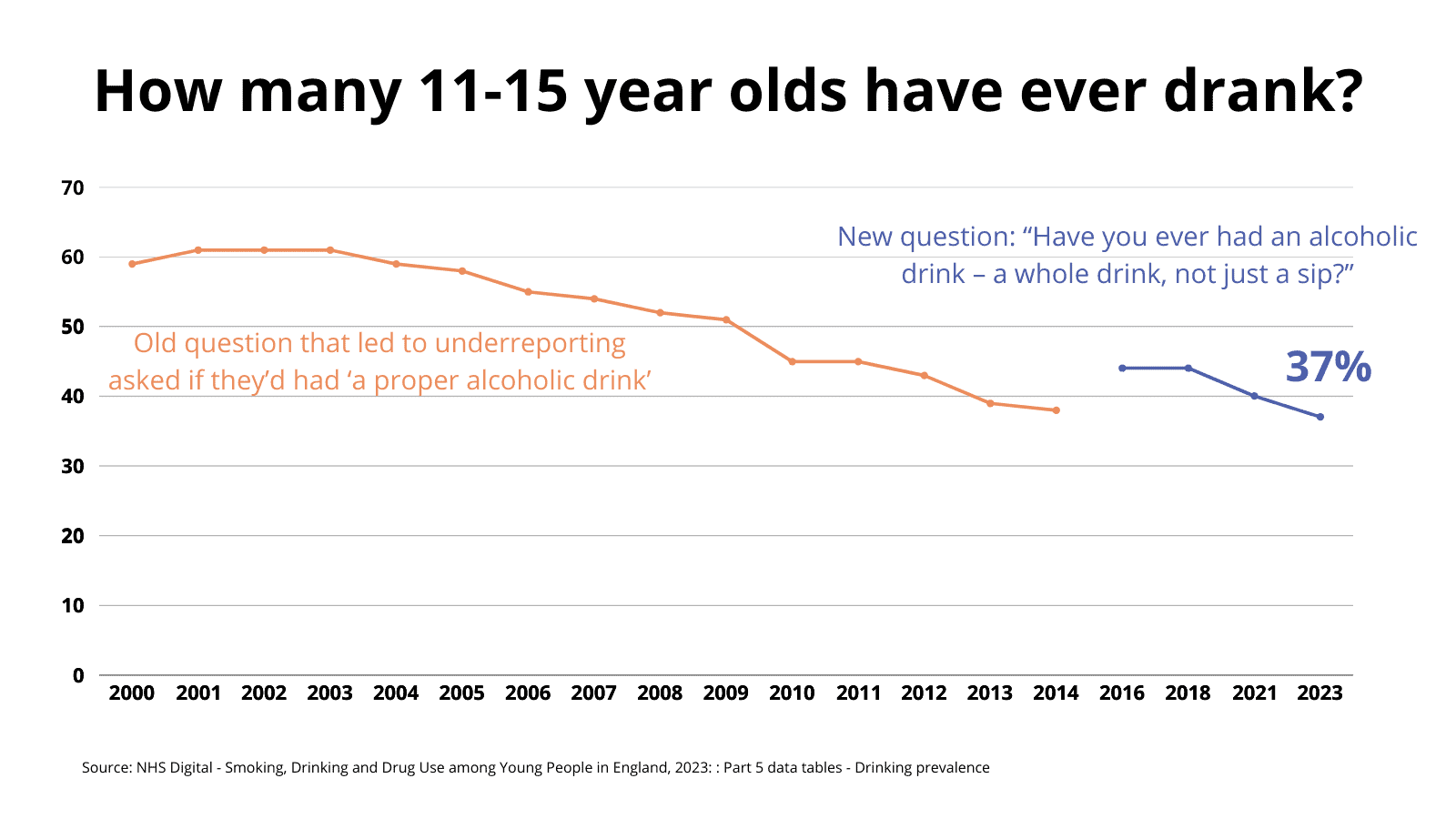
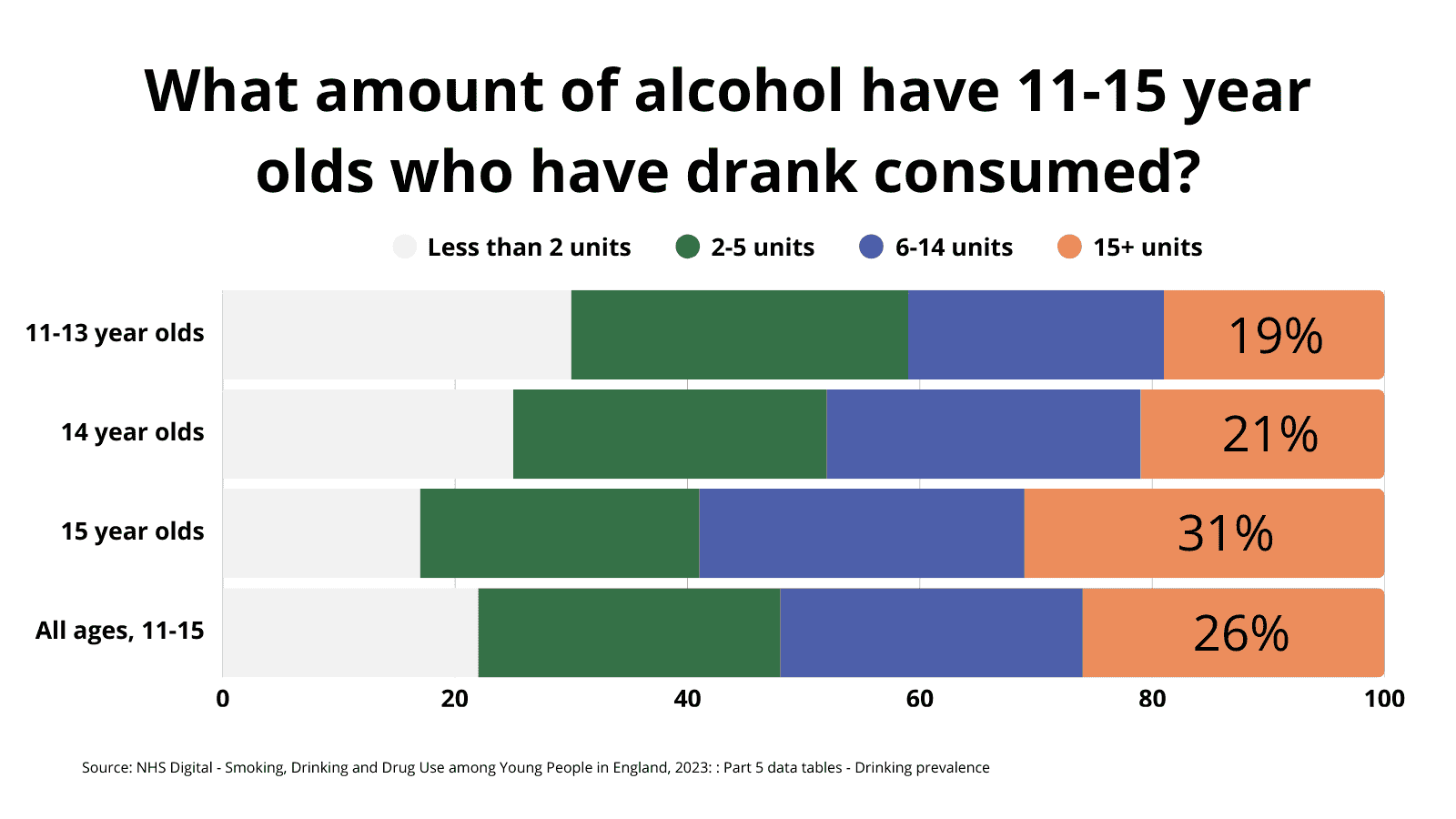
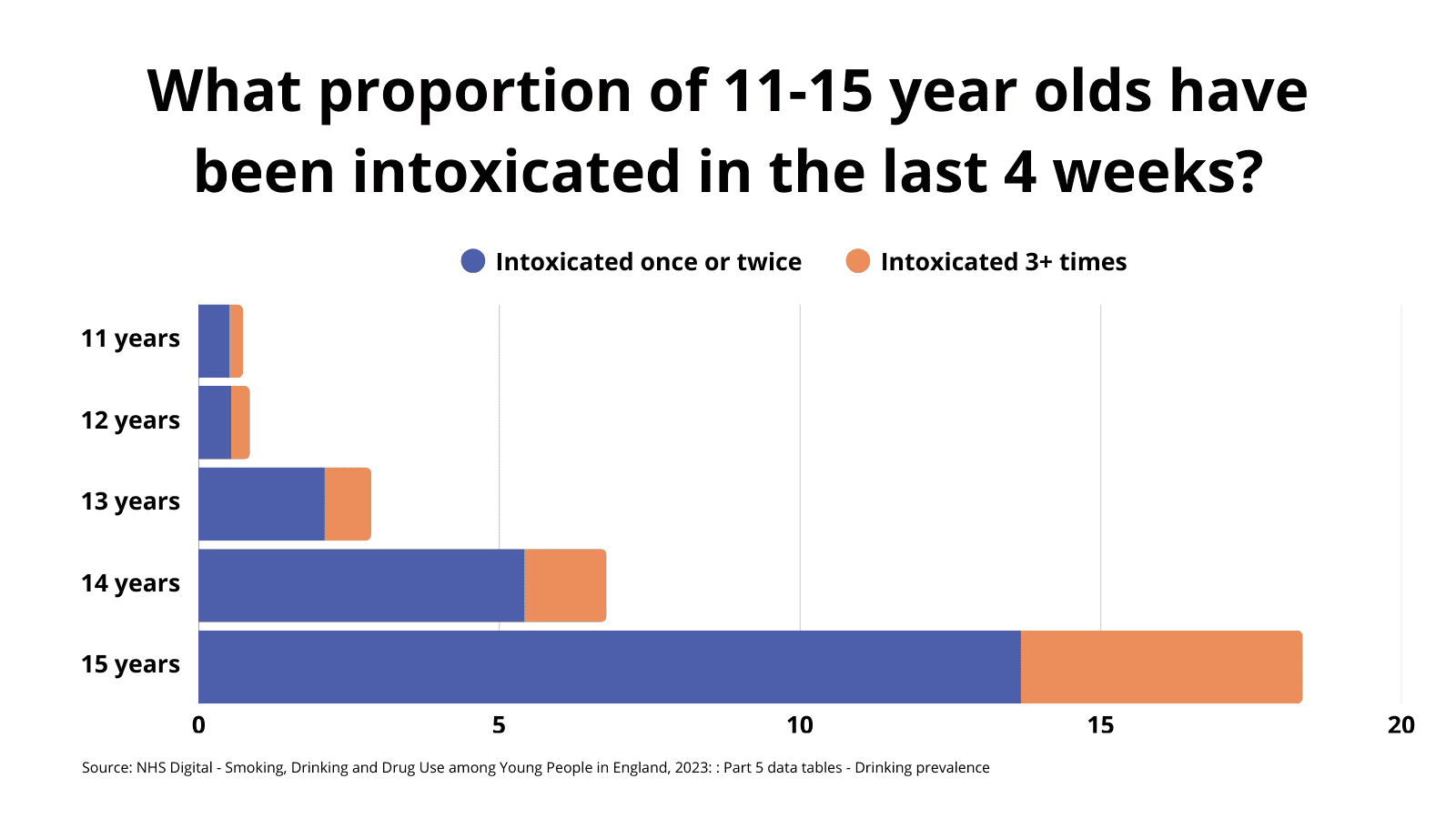
- England: 37% of 11-15-year-olds have ever had a drink in 2023
- Scotland: 36% of 13-year-olds; 71% of 15-year-olds
- Wales: 51% of 13-year-olds; 77% of 15-year-olds
- NI: 1/3 of those aged 11-16, half of whom had their first drink under 13
- The following charts are for England only.
- 68% of people in England aged 16-24 had consumed alcohol in the previous year, the lowest of any age group.
- 79% of people aged 65 and above in England had consumed alcohol in the previous year, slightly above the adult average of 77%.
- 85% of those aged 55-64 had – the highest age group. 81% of 65-74s had and 77% of 75+ year olds had.
- 75% of women in England reported drinking in the last year
- Average number of units drunk per week by women: 8.9
- 1 in 7 women are drinking more than the CMO’s weekly guideline of 14 units a week
- 78% of men in England reported drinking in the last year
- Average number of units per week consumed amongst men: 16.7
- 3 in 10 men drink more than the CMO’s weekly guidelines
Briefings
Reports


Blogs

Medical students and recovery communities – learning from each other
24th March 2026

Alcohol industry pushback forces Irish Government to kick health warning labels down the road
17th March 2026

Alcohol, family and change: rethinking drinking across generations in Romany Gypsy and Traveller communities
10th March 2026
European health organisations are powerless against the wine lobby
24th February 2026

Alcohol and other drugs agencies need to contribute to climate adaptation
17th February 2026
Is the Great British Pub on the verge of extinction? The truth behind the headlines
10th February 2026

The Dry January® challenge: Separating fact from fiction
5th February 2026

“Ensure these restrictions are not enforced”: FOI documents reveal alcohol industry lobbying
2nd February 2026